Pallof Press Exercise and Anti Rotation Exercises. Why use them with Athletes?
Pallof presses are popular in social media. Till early 2000s though never saw them used. And I was an ok hammer thrower! If you type Pallof Press in Instagram search up pops heaps posts.
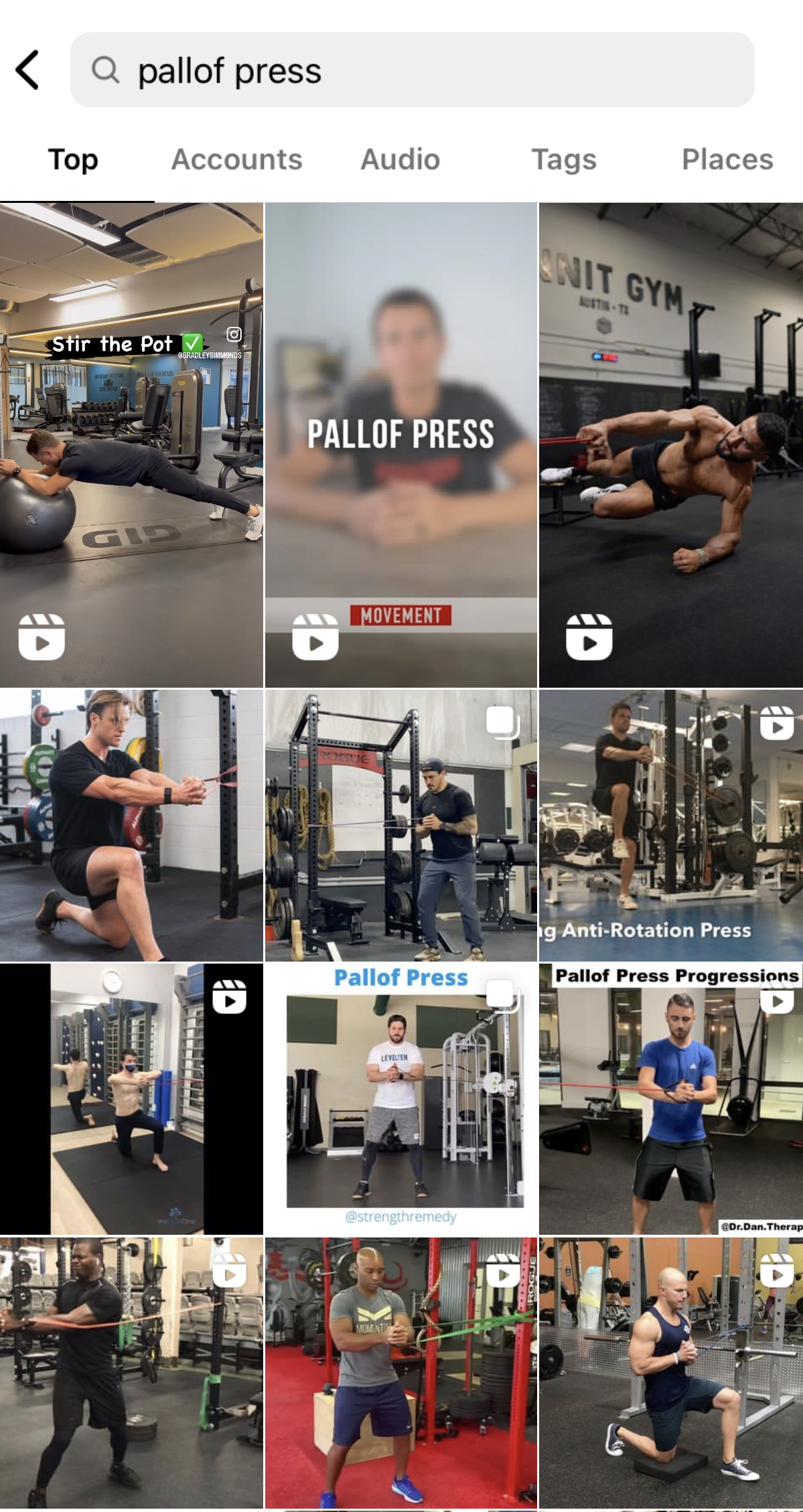
And then heaps comments like this post below “role of our core is to stabilise and prevent movement”. Later on hopefully we can suggest role of some of the spinal muscles is to stabilise the spine. But movement of trunk/core muscles seems necessary, otherwise nothing happens!

Below I have put 4 videos of different rotational exercises and Pallof presses. Obviously heaps more variation out there with medicine balls, barbells and machines. But in a multi joint rotational sports (most!), what is role of Pallof Press exercises and the anti rotation theory?
So even without trying to assess a Pallof Press place in a program, lots of questions should also be popping up on how to sequence rotational exercises. For example do we do the last video where the athlete just uses the trunk to rotate the cable, then move to exercise where Tsitipas uses kinetic chain. Then progress to using a medicine ball versus a wall at high speed. But object of this article is to assess the value of a Pallof Press and anti rotation exercises. And where they fit in.
Ok. So healthy athlete? Discus for example. How will a Pallof Press help this athlete? I could post baseballers, tennis players and many sports. Let’s just look at this. What’s happening?
So I slowed down video at critical point of maximum rotation. Generating torque, ready to launch. So let’s keep jargon simple. On landing and double contact, she starts by driving foot then hips. Creating disassociation. Trunk seems on stretch for want of better word. Thus one would assume obliques then recoiling and adding “ooomph” to throw. Then last little bit is upper body. Kinetic chain. A sequence. Coordinated and multi factorial. What are muscles around spine doing? Haha. Not sure. But assume it’s not totally static isometric hold throughout. And talking forces. Big! What relevance does a Pallof Press have here? Not sure. Obviously some of the spinal muscles have to maintain stability here whilst rotation occurring. I assume there is movement but stability at same time. But things happening very quickly also here. Instantaneous readjustments. So look at slow mo. Lots happening in my opinion around the trunk.

A bit of a google search for functions of some back muscles. Without getting complex. Lot going on. Not just stabilisation.
- Rotators muscles are a set of short muscles located laterally along the vertebral column, attaching between the transverse and spinous processes of thoracic vertebrae. As a result, the rotatores function as stabilizers, extensors and rotators of the spine.
- The multifidus muscles produce extension of the vertebral column. They also generate some rotation of the vertebral bodies away from the side of contraction, and they are also active in lateral flexion of the spine.
- The longissimus muscle is not one muscle, but a collection of three separate muscles that run up nearly the entire length of both sides of the spinal column, from the lower back up to the neck. The erector spinae muscles, including longissimus, are the most powerful extensors of the vertebral column. Their main actions include spine extension and lateral flexion.
The majority of the research with torso/core stiffness has come from Stuart McGill. 2 papers in particular looking at short and long term isometric training and core/torso stiffness. The first paper looked at a novel way to measure stiffness and incorporated isometric exercises plus variations such as Pallof Presses versus a dynamic core routine. Using their stiffness measure the isometric routine came up trumps. Second paper examined the McGill big 3 exercises and impact on stiffness. Links below and lots of cross references in paper. I think some valuable information in McGills work on stiffness and definitely implications for Low Back Pain and rehabilitation.

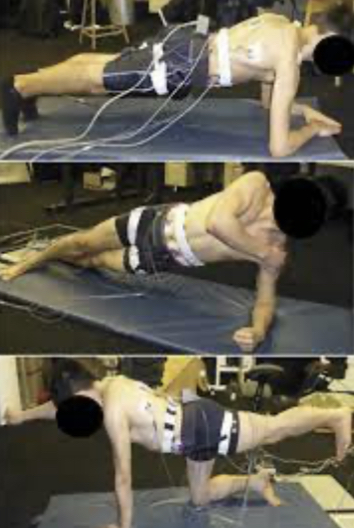
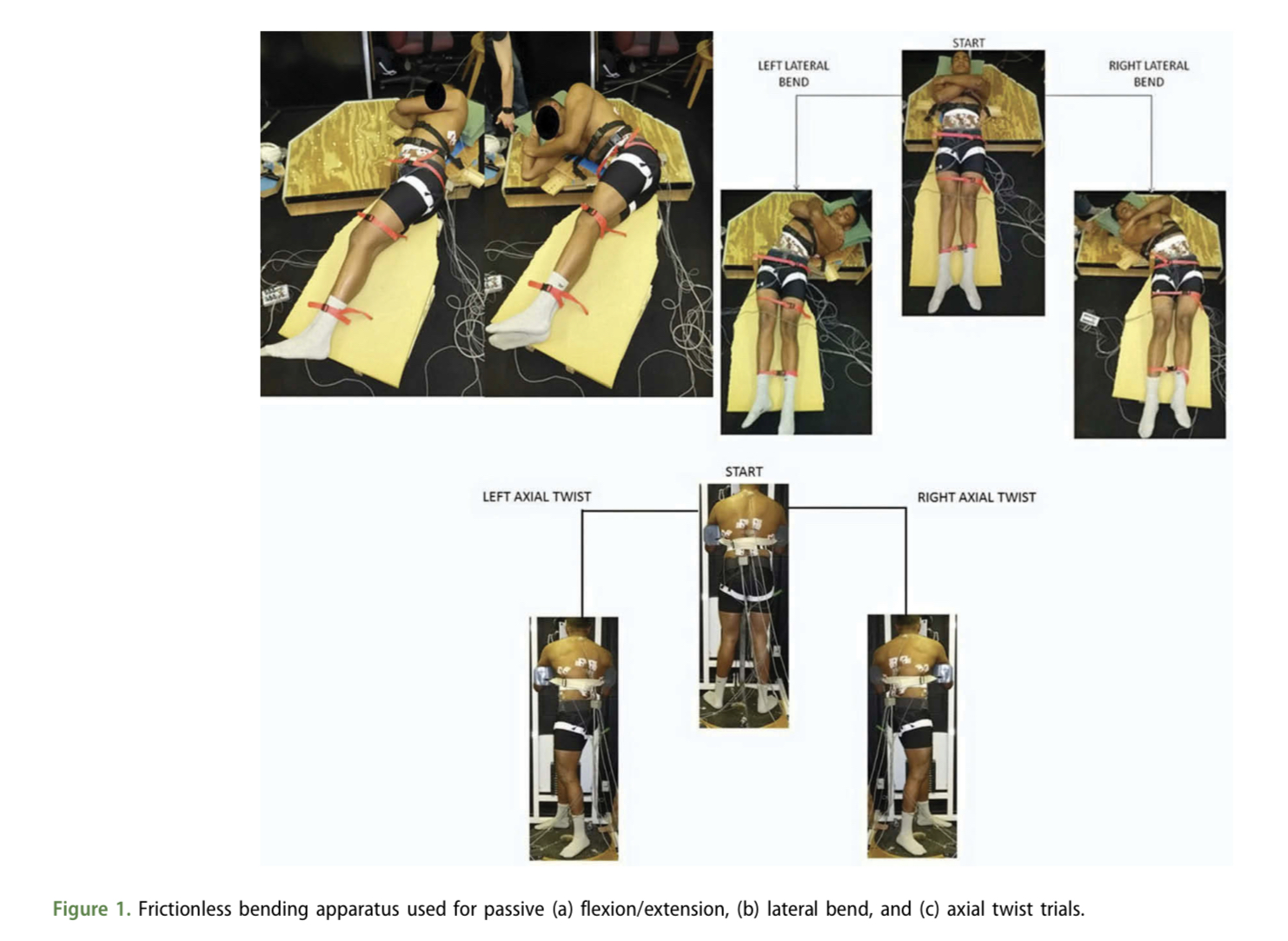
At this point it is important to acknowledge the work of Stuart McGill in rehabilitation. And the crossover to sports conditioning. And going a bit deeper, I was privy in early 2000 to some work with AFL footballers to dynamic ultra sound evaluation of transverse abdominus, pelvic floor and multifidus. The research by people like Julie Hides lead the way. Below is a study on cricketers and lower back pain. Essentially this is rehabilitation. Obviously everything working in synchrony with a fast bowler also improves performance. But for this article need to put this stuff in a bucket. What I did see in AFL was some N= a few correlations with inability to fire up TA etc and problems with groins and lower back. I think it is very important in this article to acknowledge fine tuning is sometimes required in athletes with lower back pain/groins and even hamstrings. And this is not forum to debate whether “switching on TA” with ultrasound is useful. But it is naive to go down meathead way and say some Jefferson deadlifts will cure your back pain. (might for a few). But for the purpose of this article let’s assume we have a healthy athlete. We are trying to hit a tennis ball harder, smack a baseball or throw a discus 80 metres.
https://www.jospt.org/doi/abs/10.2519/jospt.2008.2658

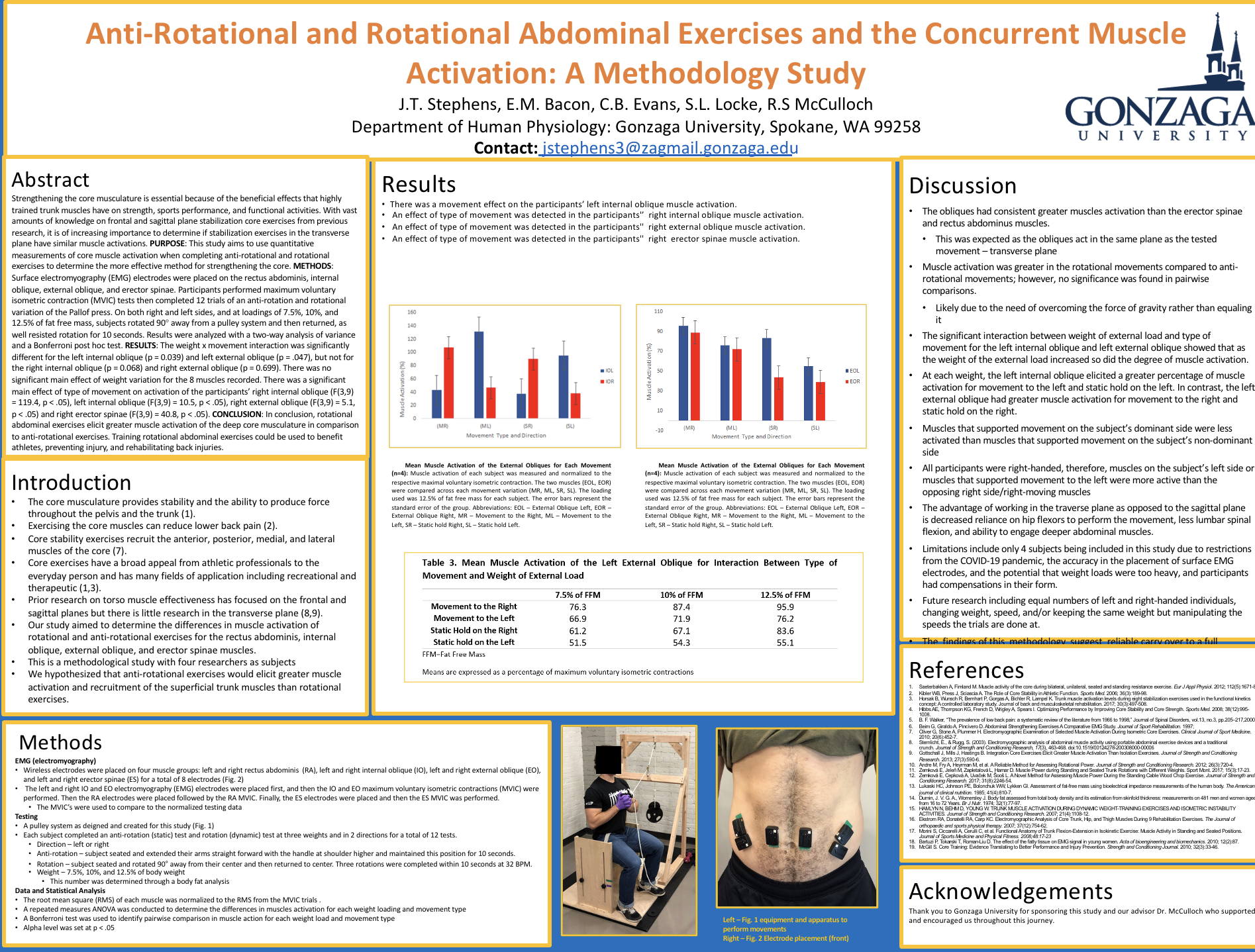
So where does this leave us? I can show you hundreds of videos of throwers, tennis players and other similar athletes doing heavy duty rotational exercises. And I remember having huge obliques as a hammer thrower (and a strong back!) doing all forms of rotational stuff. Probably the stabilisation work was done doing good mornings or other weighted lifts. McGill jumps to a conclusion that after his study using Muy Thai athletes, that isometric or anti rotation exercises are superior. Tell that to a 23 metre shot putter! I did find a pilot study recently that did some nice evaluation on muscles involved in rotation and anti rotation exercises. Cannot find a thing otherwise. And in their view rotational exercises came up best. Below is a link and their poster. Now tiny study, but I liked the way they evaluated muscle activation more than McGills method of evaluating stiffness.
https://digitalcommons.wku.edu/ijesab/vol8/iss9/12/
So where does this leave us? The evidence for using anti rotational exercises for performance is basically zero. This has crept into social media and exercises look funky. But for rehabilitation and/or maybe some introductory “prefab” stuff obviously there is evidence of low level activation. So with many injuries, starting with anti rotational exercises is valid. But even there. Need to move on.
But taking this concept into high velocity, high force sports where huge recoils are occurring at fast speeds. Nah! Contact times for elite 100 metre runners are under 100 millisecond. Take this concept to obliques in explosive rotational sports. Once feet are planted and obliques on stretch? Not long to do their thing!
Maybe Pallof Presses (and variations) are some use for young athletes. Plus they learn to brace and organise movements. Good. But movement is important in kids. So there should be a limit on static isometric exercises. I once saw a test at the Northern Territory Institute of Sport. Maximum side plank time. One 15 year old super fit girl grunted her way to 2 minutes on both sides. But was left clutching a sore shoulder (she was in pain) after side plank. That’s not a core exercise!
That’s it! Leave this one up to you. Otherwise this article is too long. But my opinion. This (Pallof Press) is a social media exercise when directed at athletes. Lots of claims with no evidence. With caveat. As I noted very useful in rehabilitation or sometimes warmups for activation or in very young athletes. Not just Pallof Presses but all forms of isometric core/torso exercises. Also some sports such as endurance cycling hold extreme positions for prolonged times. So again there is relevance. But also the role of hip mobility is critical in these athletes (and their aerodynamic positions), so lots to consider.
Last video. New Zealand Shot Putter Valerie Adam’s doing some rotational stuff. She was ok! Multiple gold medals at Olympics, Worlds, Commonwealth Games. Cannot find a Pallof Press variation that would help throw over 20 metres.
Razor Curls Exercise . Why use them?
The razor curl really came to my attention when this video was posted of GWS AFL player Dylan Shiels. It went viral. It does look impressive. Before that I had never seen it. And remember when I trained in Europe in late 70’s we were doing Nordic hamstring lowers then. With a friend in 1984 we built a glute ham machine at Preston Athletics Club. I read everything then and now. Maybe the razor curl was used for hundreds years? But I had not seen it.
When I searched Google Scholar the first paper I could find on this exercise was in 2009.
Link is below. Nothing before that. Could be wrong.
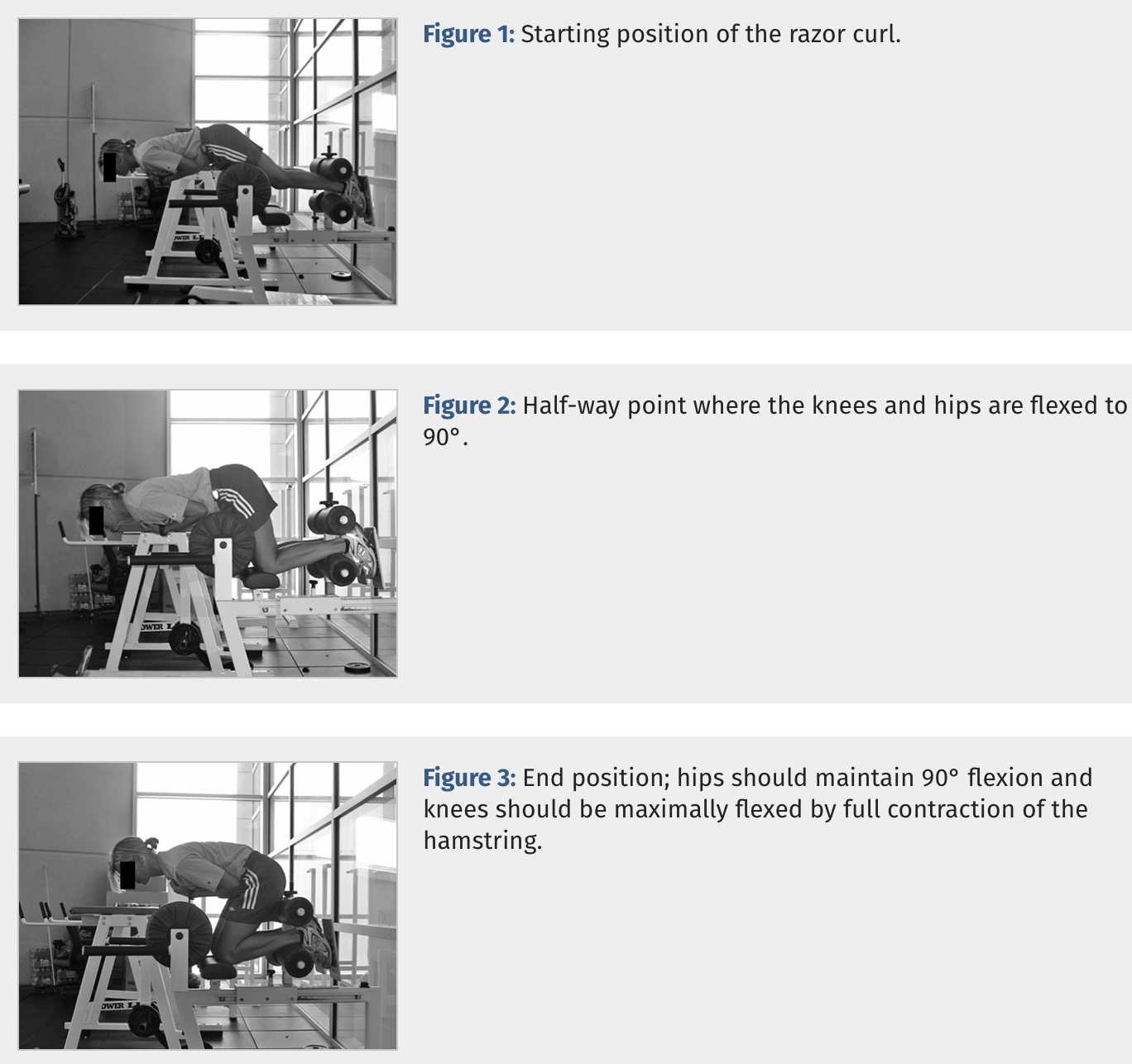

Interesting how that words “functional” and “real world” crept into their abstract. Quotes from their paper below.
“However, if one wants to fully train the hamstrings functionally, one should focus on the razor curl. Due to its functionality, the razor curl is designed to increase hamstring contractibility by placing the hip into flexion.”
“More importantly, the razor curl provides one a training method of eccentric hamstring contractions and simultaneous dynamic hip movement. This provides one with a “real-world method” of hamstring functional training in the athletic position as opposed to the prone hamstring curl.”
Below is a further summary from this study. To be honest I could not summarise in my words, what they were getting at. So just planted the excerpt here.
“The razor curl places the hip at 90°, thus placing the hamstring on stretch for optimal production of knee flexion. In addition to placing the athlete in a functional position when performing the razor curl, one is also training the hamstrings eccentrically at the knee. Training the hamstrings eccentrically in a position that also provides for gluteal activation provides the athlete the chance to develop neuromuscular conditioning in the functional athletic position. The net effect of this neuromuscular grooving is to provide the athlete the opportunity to place the hip and knee in the optimum position with hamstring activation to protect the ACL.”
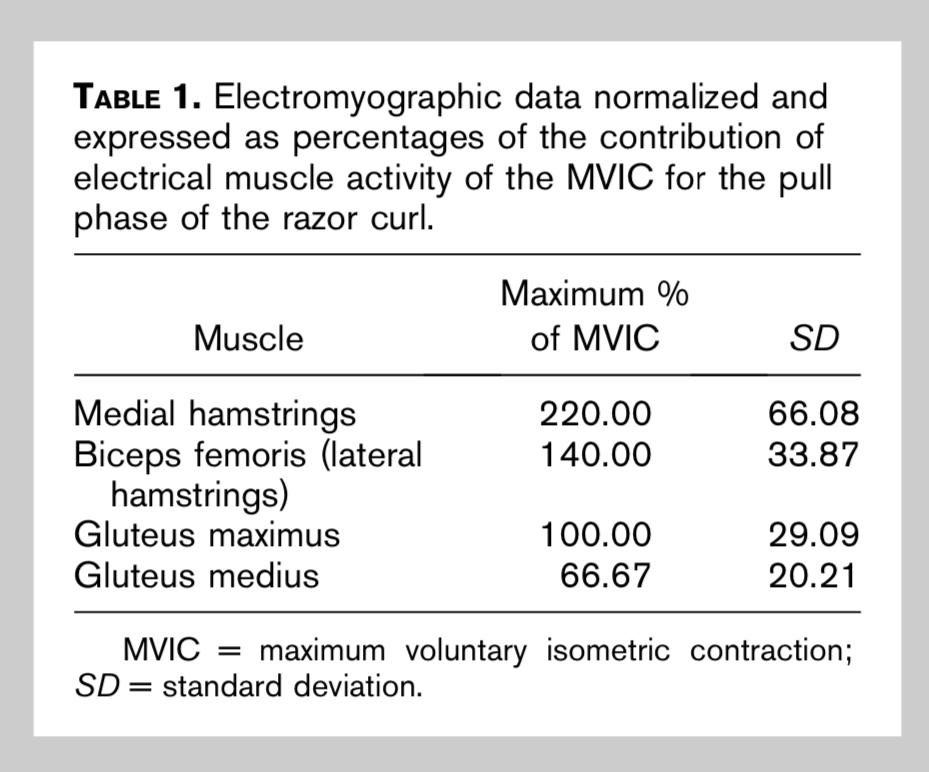
In fairness to the authors whilst they talk about functional positions, their results do show that medial hamstrings were targeted more in this exercise. And thus they go on to talk about the relevance of medial hamstrings (thus this exercise) in ACL rehabilitation and prevention. Table is below. Interesting though if we fast forward to social media now, this exercise is posted often as a crucial one in hamstring injury rehabilitation and prevention. But we all should know the relevance of biceps femoris long head in hamstrings in sprinting. So that’s a clue to the rest of this blog article.
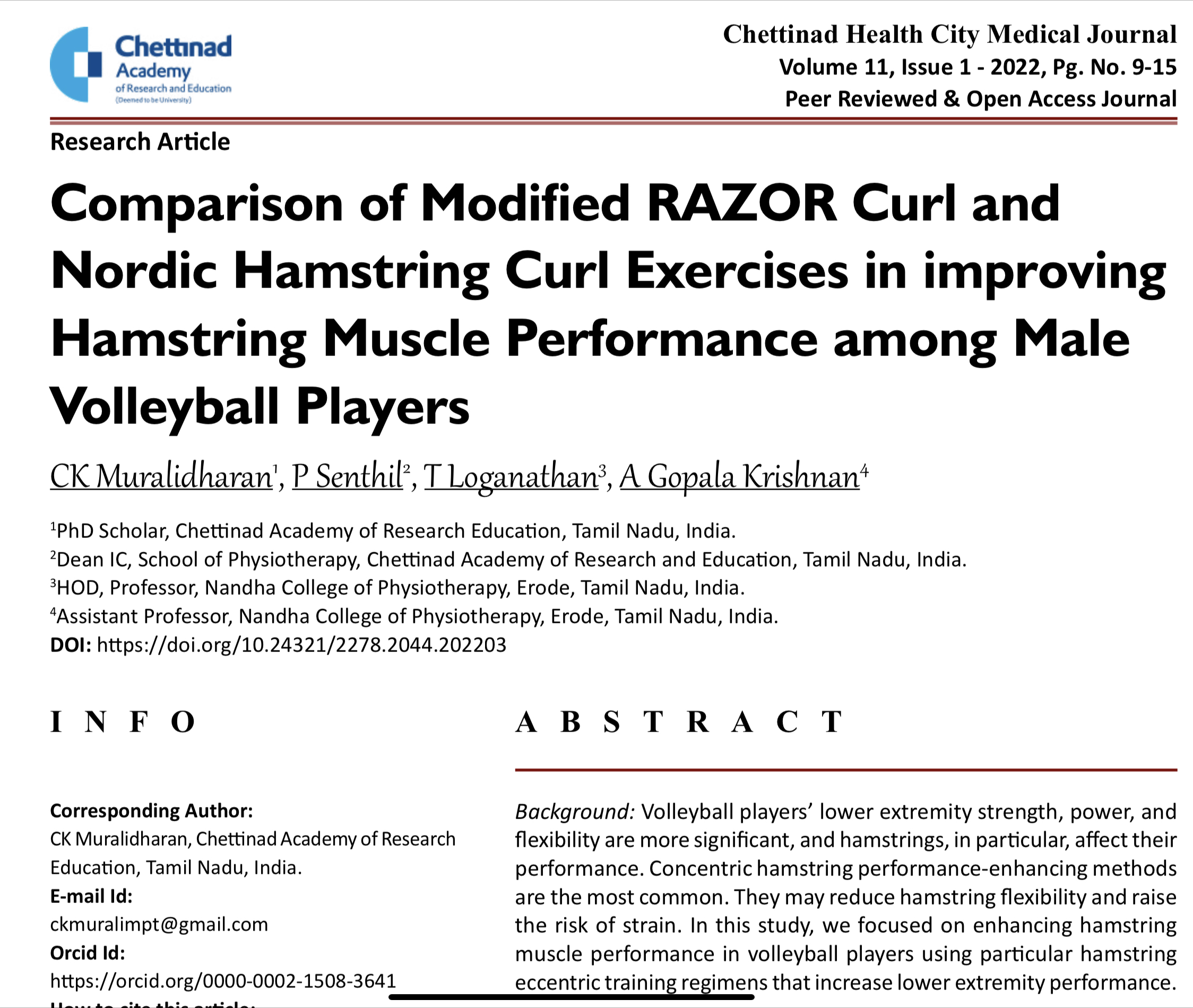
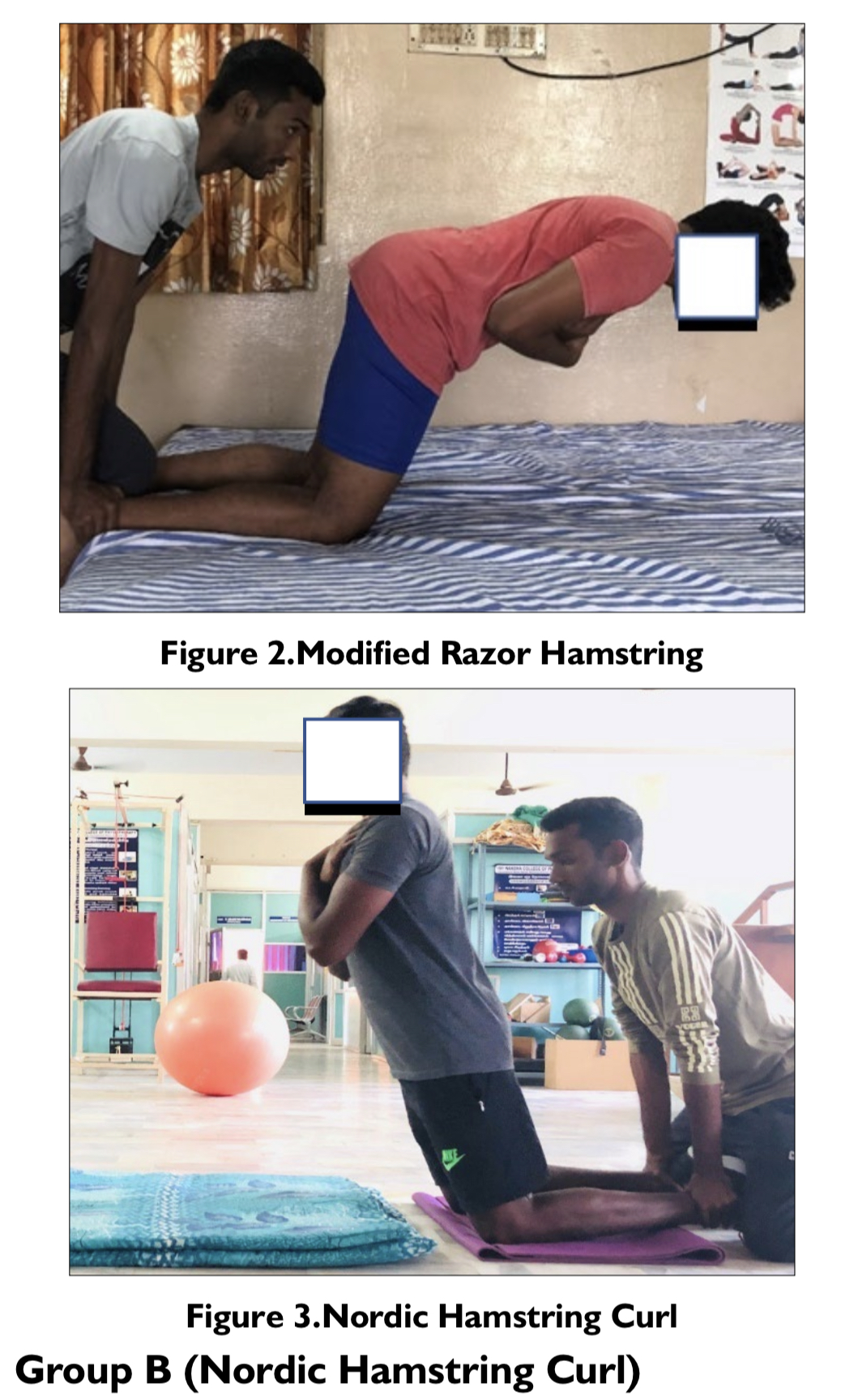
I found this interesting study from India. It compared the modified razor curl (assume a harop curl nowadays) with the conventional Nordic hamstring. It looked at performance tests. Maximum lifts, 40 yard dash and a back arch superman test. Their conclusion was that the Nordic was best for lifting and sprinting tests whilst the modified razor curl would be better for core strength. Below is their conclusion:
https://medical.advancedresearchpublications.com/index.php/CHCMJ/article/view/1066
“Finally, it can be concluded that if players need to improve strength as well as support muscles such as longissimus and multifidus, modified RAZOR curl was highly recommended. In the case of players who wanted specific power and strength training, Nordic hamstring curl was the perfect option.”
I am not going to comment on the robustness of this study. But it starts leading us to some questions. Obviously the razor curl is different to the modified razor curl. Once you have flexed upper back to 90 degrees in modified razor then hamstrings are contracting as one pushes out. Suppose my question is why do the razor curl and harop curl? If there is a “core” component how useful anyway? Often modified razor curls are presented as a progression to nordics. But we know there a a huge number of regressions we can do with nordics. Using a Swiss ball in front, bands etc.

An extension of the 2009 paper on the razor curl by the same author a few years later, was promoting the modified razor curl (harop curl) as a suitable torso or core exercise. Link is below
https://www.ncbi.nlm.nih.gov/pmc/articles/PMC3273882/
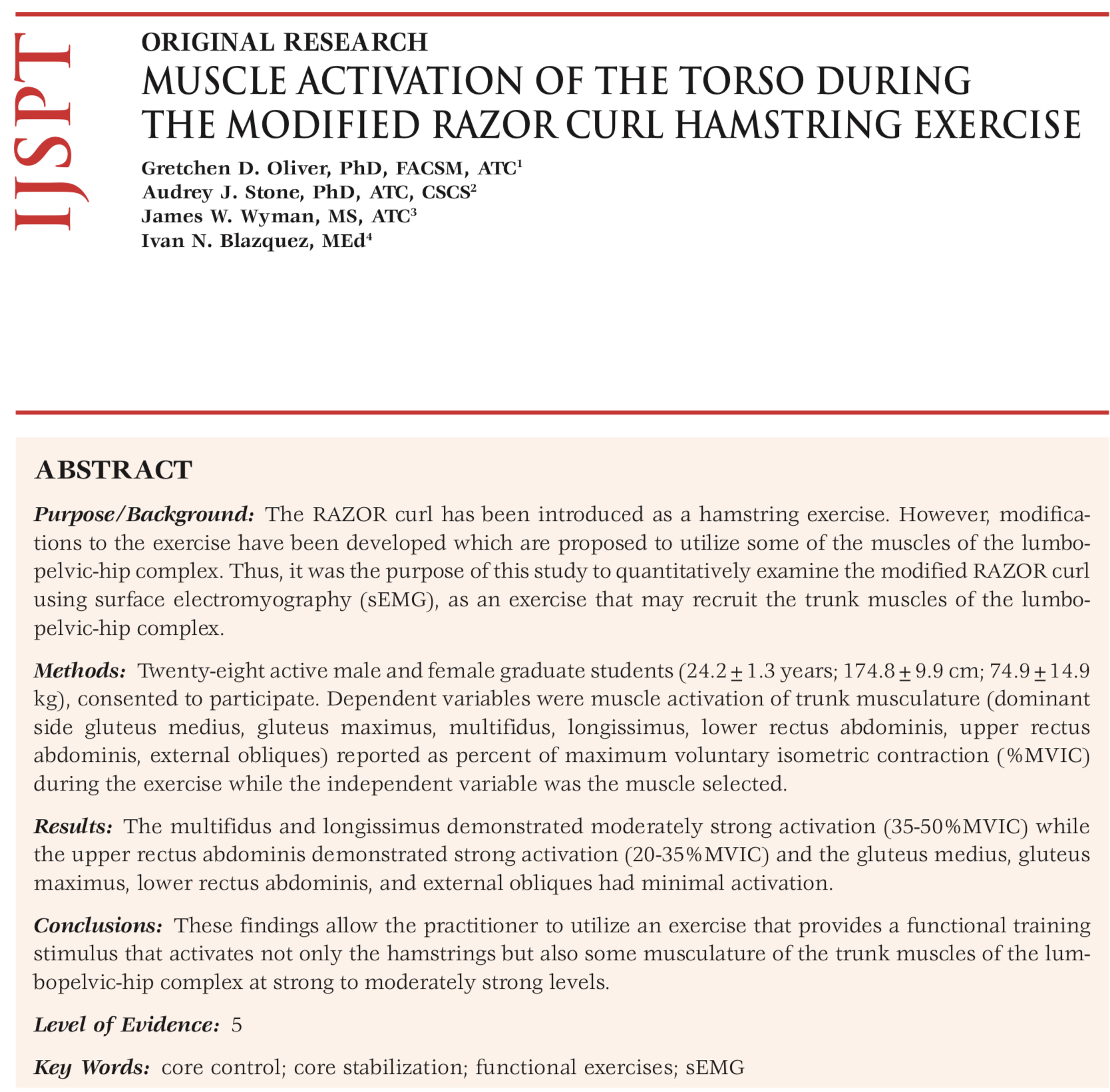
What is interesting is the small “get out clause” in this paper where the authors suggest this is only a low level torso exercise. Quote below from paper.
“The results of the current study must be interpreted with caution when determining if strengthening of the trunk musculature could occur during perfor- mance of this exercise. Although the multifidus and longissimus demonstrated moderately strong activity and the greatest of the muscles examined, the level of activity produced by the modified RAZOR exercise may not be sufficient to provide a muscular strength- ening stimulus. Previous authors have reported that muscular strengthening requires 50-60%MVIC.33. “
After this there was not much evidence on the razor curl or harop curl to be found. But certainly given the funkiness of the movements, lots of claims on social media about the effectiveness of these exercises for hamstring health. Like all exercises, of course already these exercises are ok. They do something it seems. But given the lack of time athletes have in the gymnasium, can we get better bang for buck?
Fast forward to 2019 and a recent paper looked at the effectiveness of the razor curl versus other hamstring exercises. And the methods used seemed more robust than previous papers I mentioned.
https://pubmed.ncbi.nlm.nih.gov/30629773/
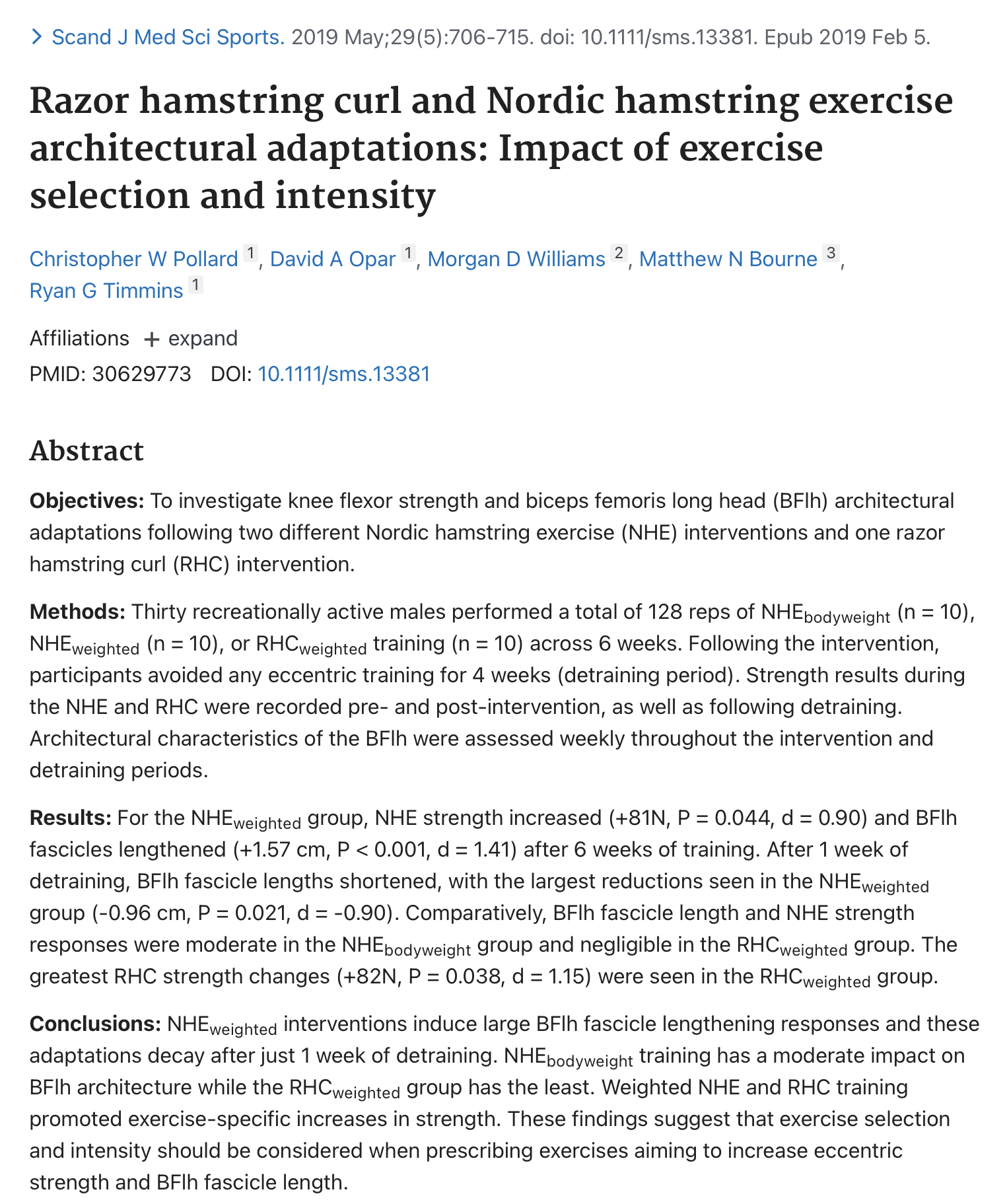
So it seems that the razor curl as researched in this paper has the least impact on biceps femoris long head! So this would seem a pretty important finding, Why do it for hamstring injury prevention or rehabilitation? And it seems the modified razor curl is a low level core torso/exercise. Below are some conclusions from this paper on the RHC (Razor Hamstring Curl).
“Finally, the RHC as a preventative exercise for HSI may have limitations, given it induces negligible BFlh architectural change or increases in NHE strength.”
“However, as there is no evidence to suggest that improving RHC strength may offset the risk of future HSI, it remains to be seen if the implementation of this exercise has its place in injury prevention practices.”
I couldn’t find much else searching Google Scholar on this exercise. Correct me if there is. But of course. Social media is awash with razor curls and harop curls and big claims. Maybe a few back extensions superset with a few Nordic hamstrings or eccentric leg curls might be a better use of S&C time for an athlete?

So conclusion? Of course doing these exercises might help a bit. But be aware that (so far) there is no evidence that they do what many on social media claim. And many on social media create their own jargon with words like proximal and distal and isometric clouding the posts. But the current level of evidence is tiny, with the most recent paper I could find putting a question mark on the exercise for hamstrings. They might just be another exercise that has crept into exercise selections. But an exercise were evidence (up till 2023?) does not back up social media hype. And remember. Despite all the hamstring gurus out there (and increase in exercises) we have not seen decreases in hamstring injuries. My opinion is there is too much emphasis on trying to find the “holy grail” exercise as against keeping it simple. IE; do some nordics/eccentric leg curls/back extensions/RDLs bit of hips etc. But then focussing more on multi factorial issues surrounding running, mechanics, dosages and proper objective return to play running programs. Seems a disproportionate percentage of time spent on the exercise side of this injury.
Hip Lock Exercise. Why use it?
This exercise has become quite popular. Before Franz Bosch had popularised the name I had never heard of it. Yet I was prescribing single leg squats, hitch lifts, progressive run drills, Pilates and low and high intensity plyometrics to improve “hip stability” for want of better word. Like the hamstring tantrums in last review of exercises, the hip lock has many variations. So I think it is important to define for this blog article what a hip lock exercise is. My interpretation of the hip lock, as popularised in social media and in Franz Bosch publications. A number of exercises that are similar are just running drills and not strictly a hip lock. For example rapid switching exercises in free standing. I will then try a find a written definition. I remember in 1987 buying a Physiotherapy book with rehabilitation exercises. I liked an exercise in the book. This was lying on the ground at almost full extension and doing a one leg bridge both dynamically and isometric. It now is often called a Bosch glute bridge. Scratch my head a little sometimes.
Okay let’s find a few you tubes and examples of how I have interpreted hip locks. First is a you tube promoting a Bosch trip to Australia and some excellent stuff. Plus the hip lock principle interspersed.
From this you tube I took an image with a hip model that probably highlights the hip lock principle more.
I need to define this because my interpretation of the hip lock exercise is to ultra hitch the free leg. Obviously it is a one leg exercise. And immediately the notion of gluteus medius activation arises. But to get that much lift on free side would suggest “other muscles” are contributing. Intuitively that looks something like quadratus lumborum doing the hitching? Before I move forward. All good exercises. Tough. Lots of stuff going on. The question I will ask is how specific to running is a hip lock as shown? And is there a more efficient, evidence based way to enhance running? In this case, maintain pelvic integrity.

I would like to ask an expert in functional anatomy or biomechanics or kinesiology if gluteus medius can actually hitch a hip like in the photos below.
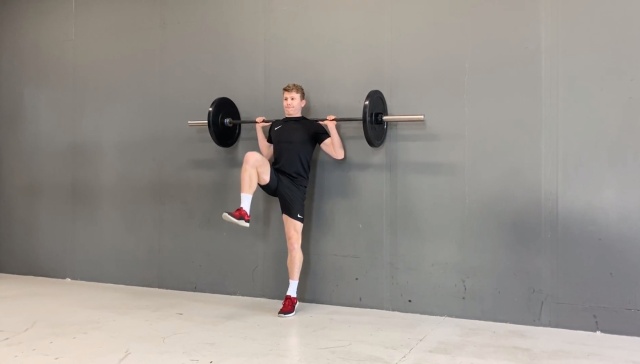
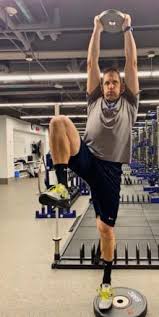
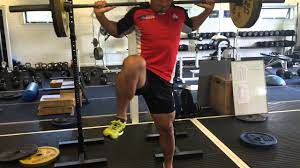
Below are a few links to Nathan Kiely excellent resources and what he calls hip locks. At times I thought looking at some of his “hip lock” exercises, they were just exercises like stepups done with good form. Other times he demonstrated what for purpose of this article will be defined as a hip lock.
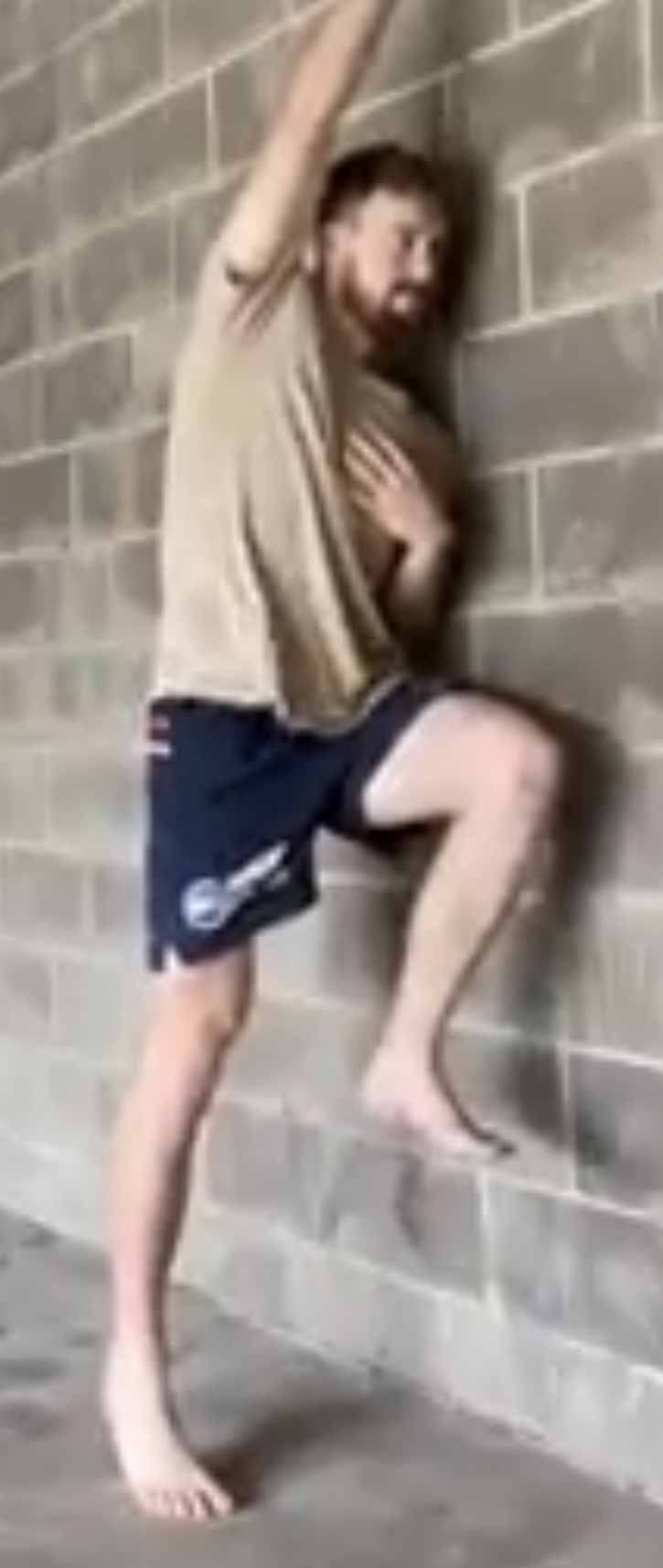
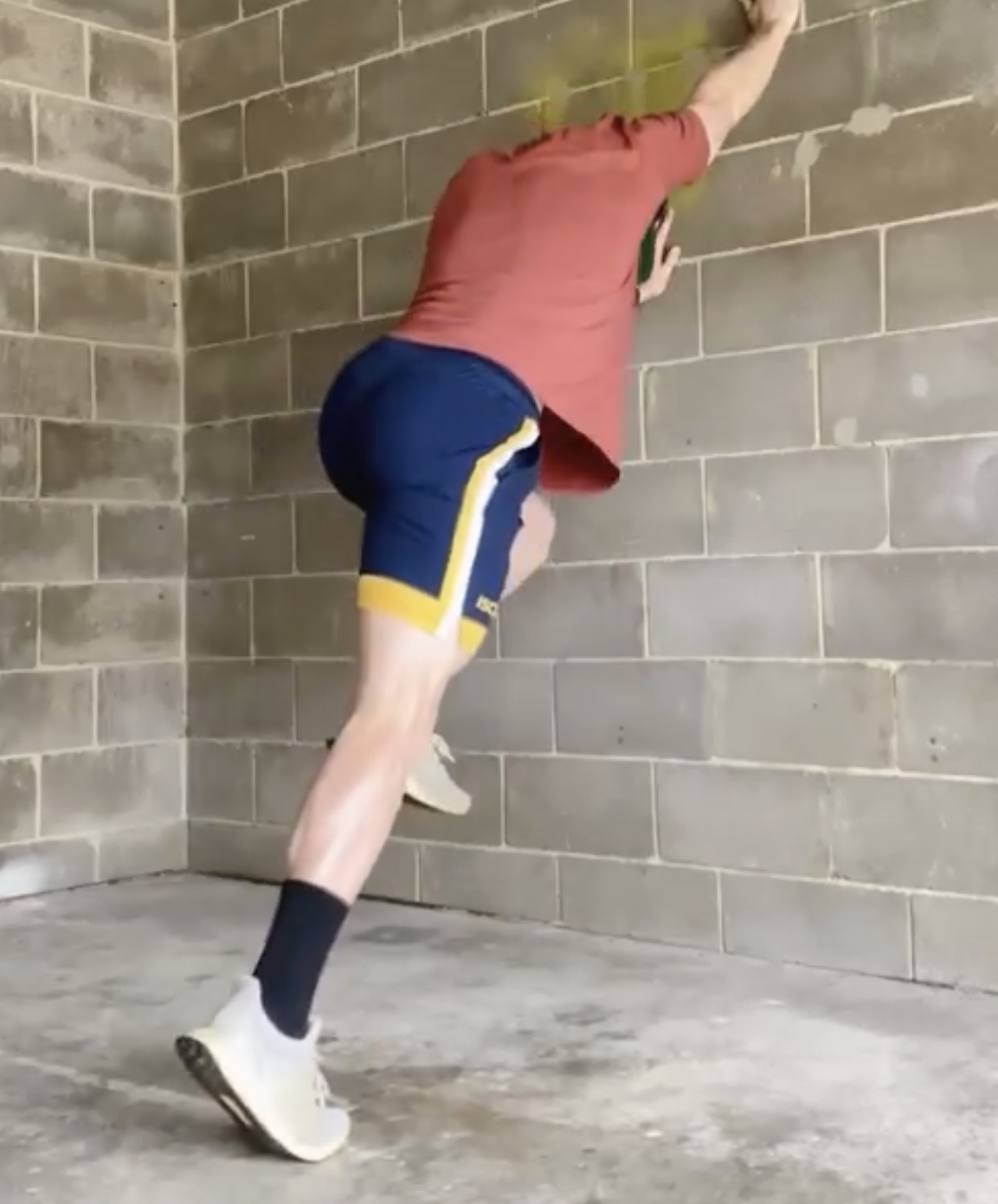
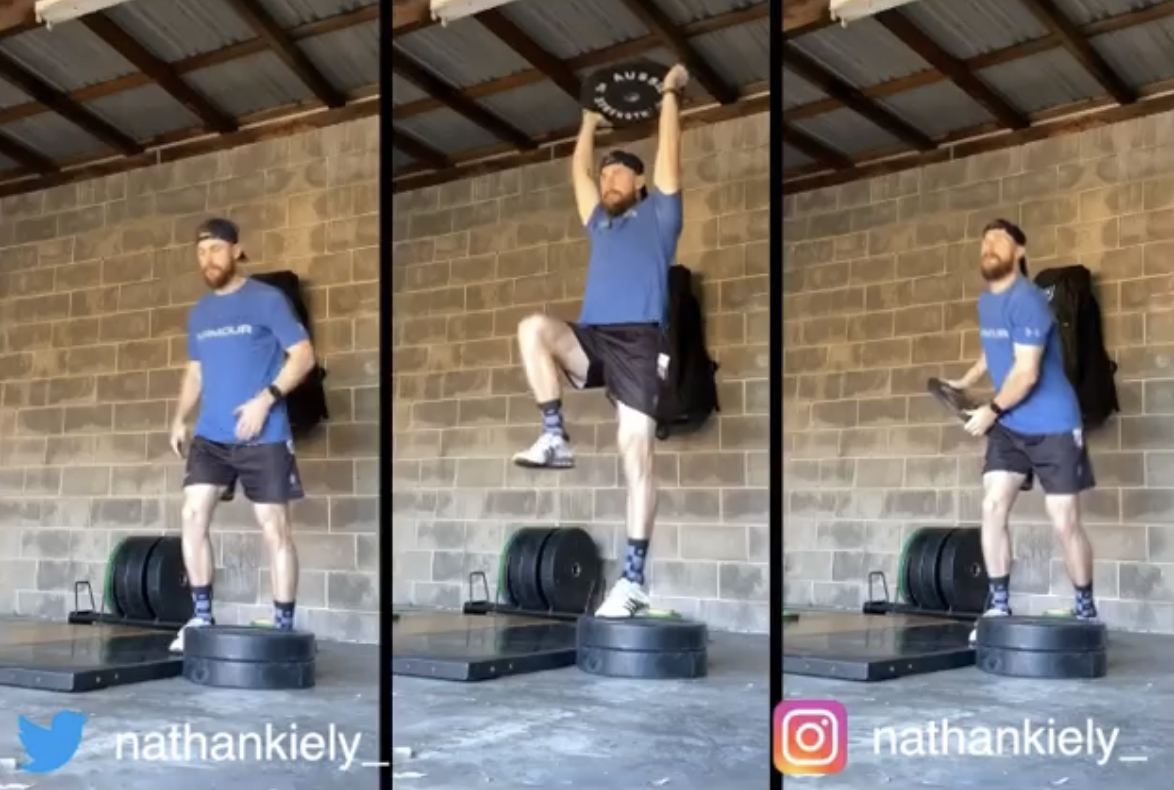
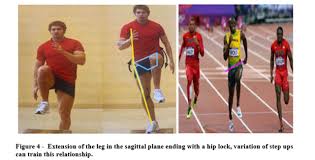
Time and time again we see images of athletes at maximum speed doing what is deemed a hip lock to justify the exercise (even though 99% of these athletes never did a hip lock as defined by me). The guy on right (red) though better hurry up and hitch that hip! High knees is often seen as a product of bouncing off the track added to hip flexion. This position is a millisecond point in time and there are lots of things happening simultaneously at early stance phase of running.
The difficulty in writing this blog article is defining a hip lock exercise. If you go back to the video you will find some dynamic switching drills and bounding drills with constraints. I am sure the Bosch process is to go from static concentric hip lock exercises and progress to dynamic exercises with stretch shortening eccentric movements. But in my opinion, one would not take some of contrived hip lock positions in wall drills for example onto a field into contrived bounding exercises with constraints for example. Well that’s my opinion!
Ok. So let’s cut to the chase. What happens in running? What is the role of gluteus medius?
I wrote an E Book on hamstring rehabilitation in 2007. The pictures of the 2 runners are David Wojcinski and Joel Corey from the Geelong Football Club AFL. These are in their first year AFL. I screened them at 90+ speed. Joel Corey is the classic glute medius issue. His general eccentric strength ie: quads etc was ok. But he did have lots of “core” issues. And some injuries. The strategy for a year or two was to work on “Pilates”, single stability work and integrate with running drills and low level plyometrics. This was along with classical weights. By his third year he was stable and obviously a player who could sprint and endure all the game. Check his record! He was a star. So by then (late 1990’s) there was already a lot of evidence on what exercises to prescribe to attack this issue. And how to progress to 100% acceleration and velocity. And fatigue! So the progression could be from hitch lifts to plyometrics to running drills to speed. Check the little table. Obviously given contact times in high speed running/maximum speed are reduced. Thus the ability to stabilise the hips needs to be trained at progressively faster speeds and forces. But there should be no compromise for poor technique through the progressions.
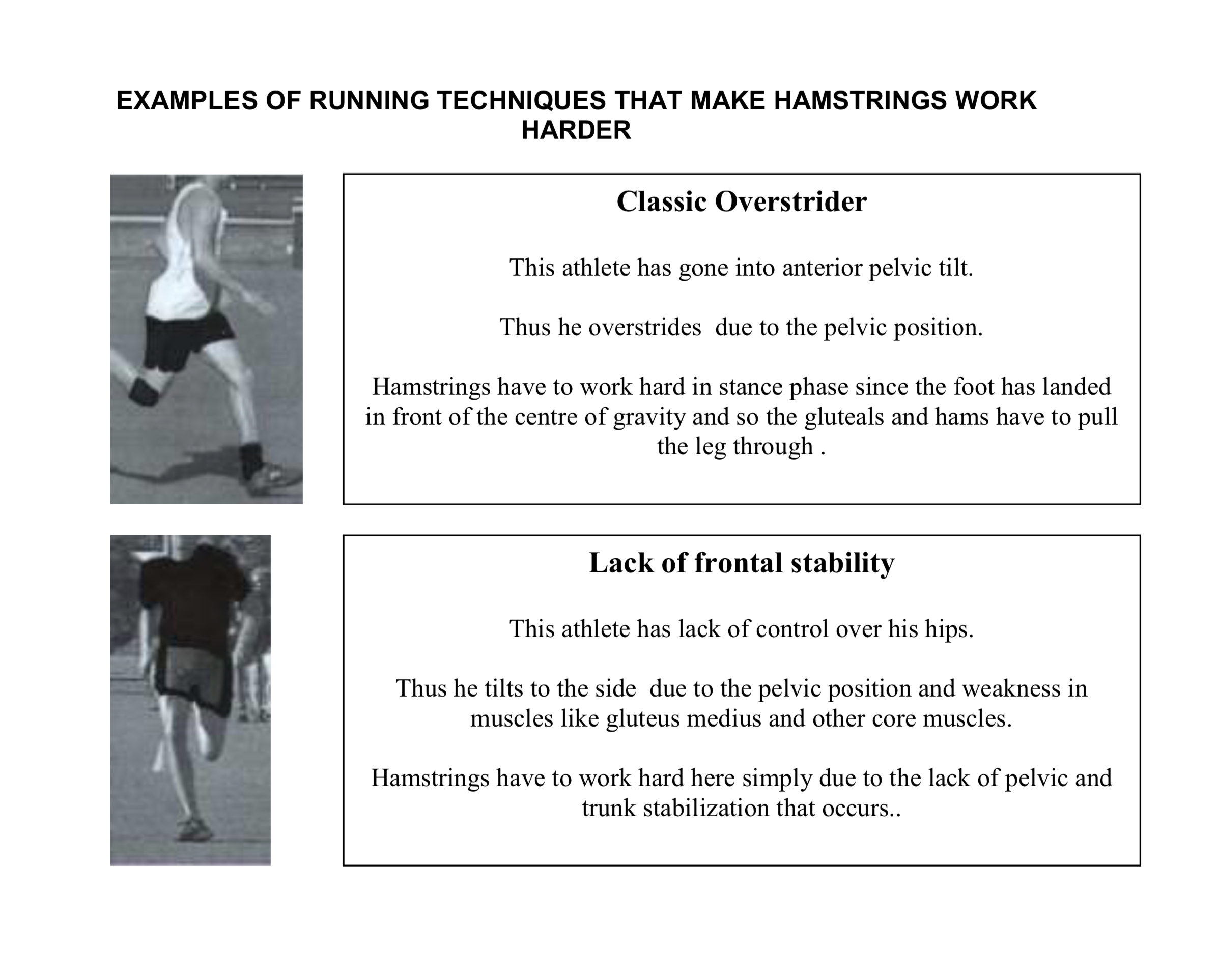
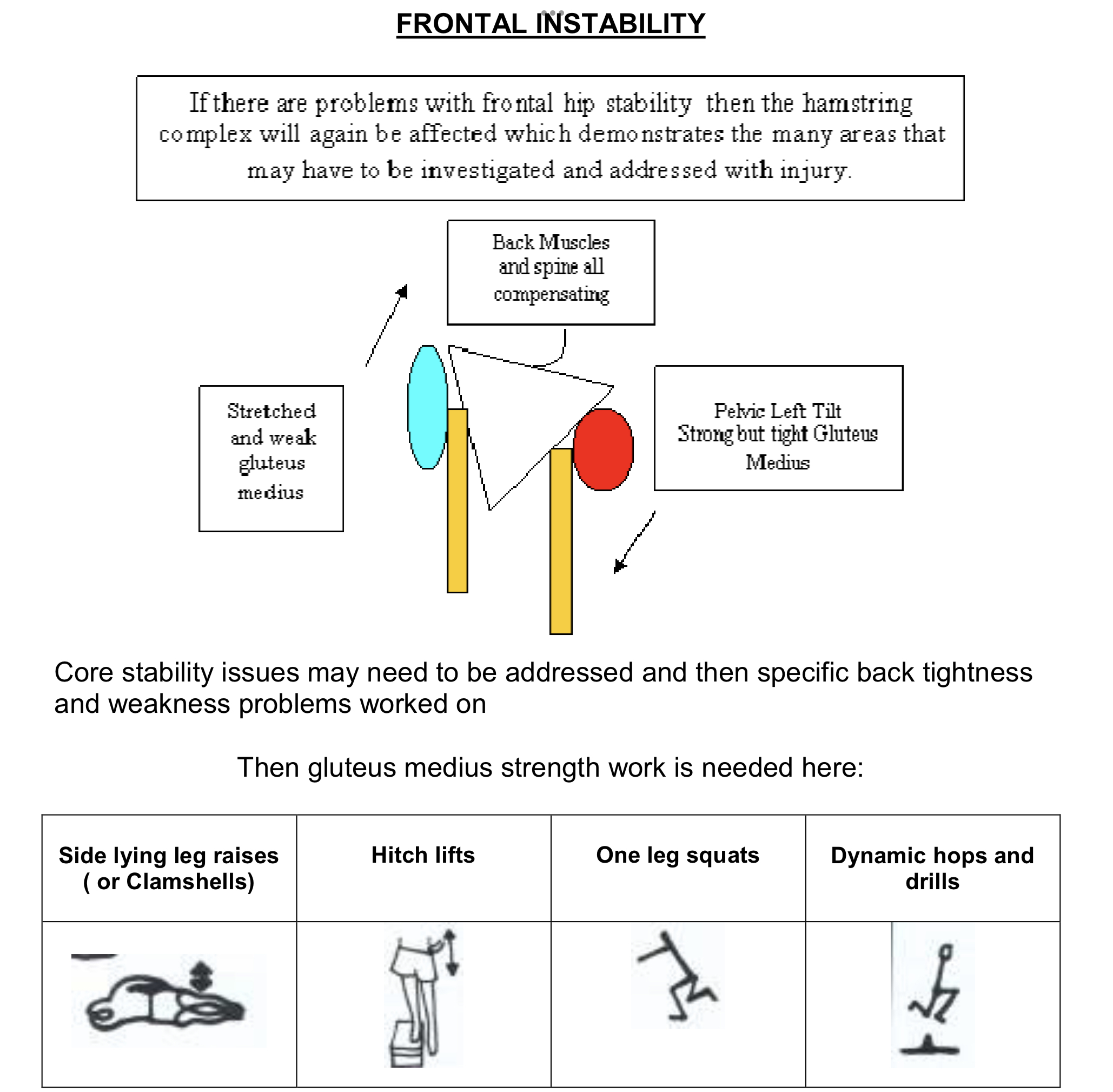
So let’s first look at some evidence about what can lead to pelvic issues related to gluteus medius and minimus in particular and then how it relates to running.
The Prehab Guys website is an excellent resource. And in this article they show lots of exercises to strengthen Gluteus Medius and hips when related to the Trendelenburg Gait. They nicely describe the history of this test.
“Quick History Lesson: In 1895 Freidrich Trendelenburg described the Trendelenburg sign as weakness of hip abductor muscles in reference to congenital dislocations of the hip and progressive muscular atrophy. Fast forward to today: most orthopedic and physiotherapy textbooks describe this sign as a test of hip function.”
And we can find a lot of evidence on the Trendelenburg Test and implications. Below is a nice you tube on pelvic drop, Trendelenburg test and exercises.
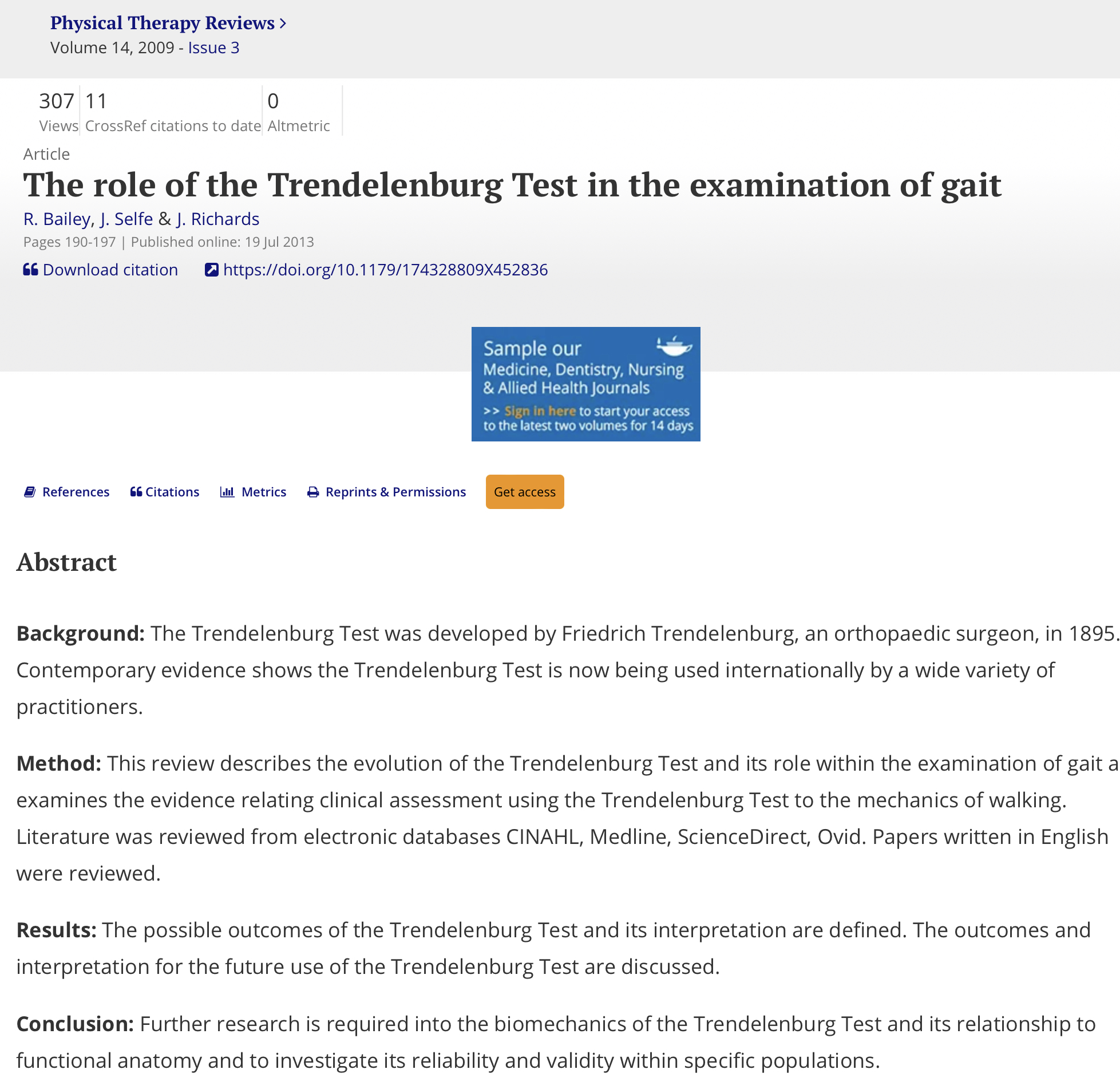
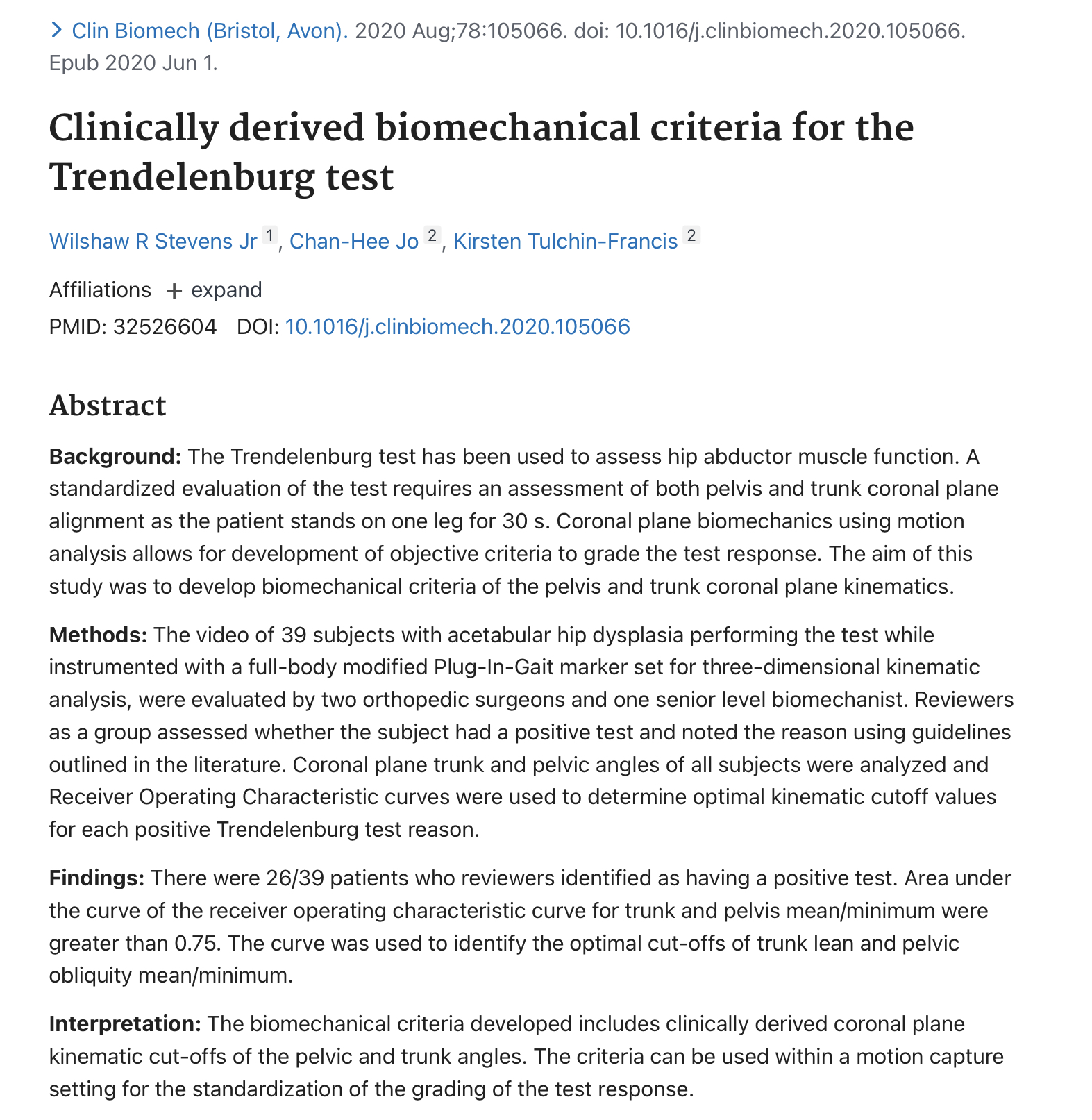
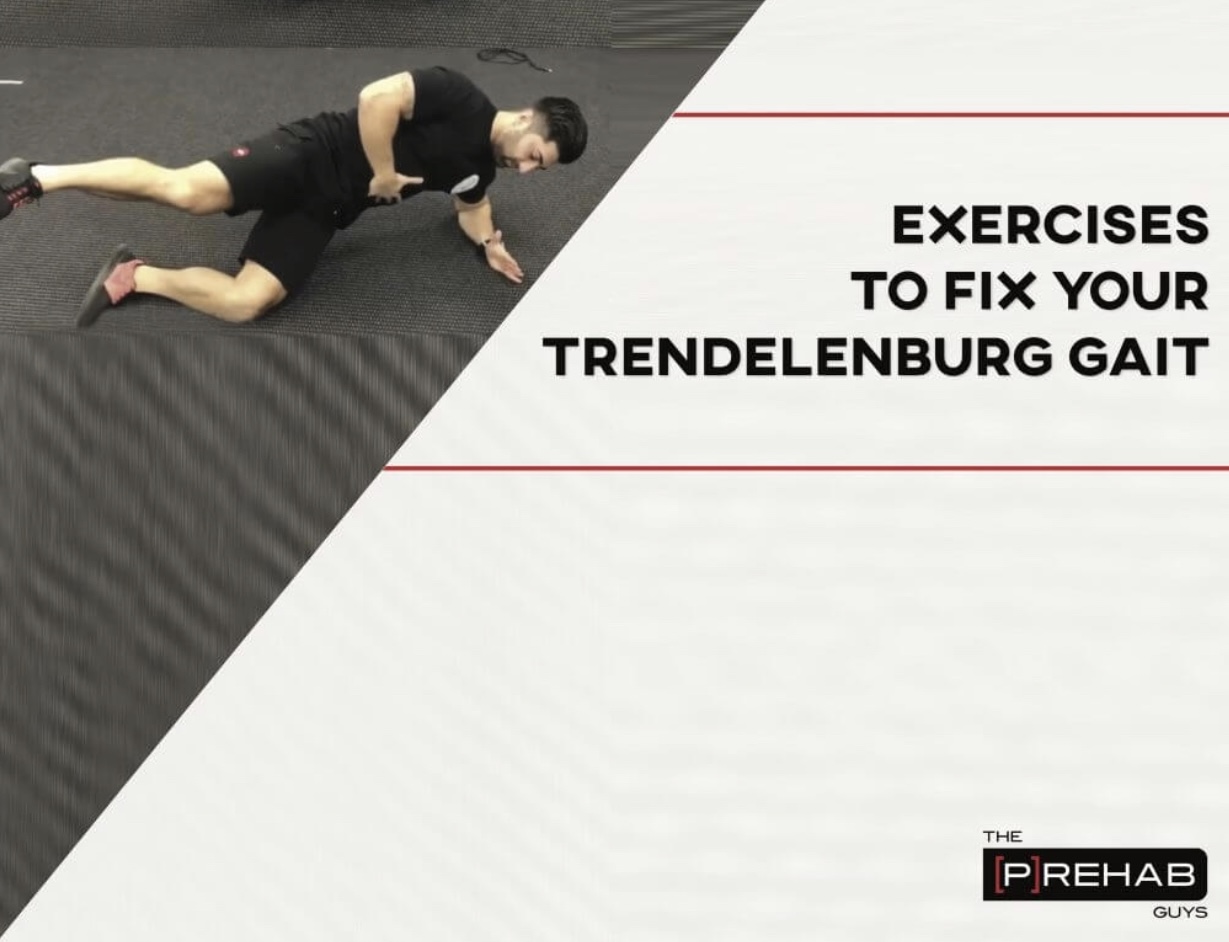
There are lots of papers grading gluteus medius activation. Suffice to say that being on one leg always kicks activation up. And single leg squat is usually graded very high. And in my opinion this probably reflects a bit closer to what is happening in running. Rather than what the classic hip lock exercise looks like. The gluteus medius can abduct the hip to level but unlikely it can take hip into extreme positions as we see in the hip lock exercise. Well after reading all the anatomy books, that’s my opinion!
Below is the link to this paper classifying exercises. There are many other papers doing the same thing. Below is an example of % muscle activation. And below is a you tube describing the function of GMed.
https://www.jospt.org/doi/10.2519/jospt.2009.2796
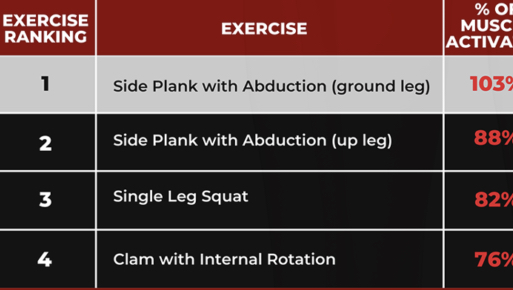
The question is can the gluteus medius further contract the pelvis to tilt the whole other side as in a hip lock exercise? Or are other muscles in the trunk simply lifting the hip?
There is a huge evidence base in this area from Trendelenburg test to how the gluteus medius functions when running. One nice paper (Running related gluteus medius function in health and injury: A systematic review with meta-analysis) puts things into perspective a little. Obviously the whole reason for the hip lock exercise is to ultimately transfer to running at all speeds. When you read some of the grabs from this study the whole notion of motor control starts to become important. The muscle has to fire in situations that have very short contact times and huge eccentric forces. Thus like all exercises that need to transfer to the field there has to be progrsssions. Obviously in the initial video showcasing Bosch tour, one can see the progressions to fancy bounding and drills often with constraints.
Running related gluteus medius function in health and injury: A systematic review with meta-analysis
https://www.sciencedirect.com/journal/journal-of-electromyography-and-kinesiology
“The results support the notion that the function of GMed in running is primarily to assist with absorbing the ground reaction force in the loading phase (Hamner et al., 2010; Lenhart et al., 2014)”
“to support coronal plane pelvic alignment during the early stance phase of running”
“mechanism of the hip in healthy or injured athletes. For example, increasing running speed, particularly > 7m/s requires larger hip muscle amplitude (Bartlett et al., 2014; Chumanov”
So whether the hip lock is a contrived exercise utilising trunk muscles to pull the hip up does not make it a bad exercise. Anything an athlete does on one leg will fire gluteus medius. It is good work. But is it the most effective progression?
As far back as the 1970s I used the Gerard Mach drills then in the early 90’s bought all of Loren Seagrave’s cassettes which helped me a lot. Below is a You Tube advertising the Speed Dynamics Course. Looks like lots of level hips to me when watching the athletes in the video. Running drills are obviously low intensity eccentric exercises that mimic the running action. When progressing from some single leg squats and wall drills (in the context of “gluteus medius” development), run drills provide both technical and conditioning opportunities to move forward. Low level plyometrics (and high intensity plyometrics also) are valuable tools to continue the progressions at higher intensities. Remember the notion of motor control I mentioned before as we progress to maximal accelerations and speed. Obviously businesses like Altis now put out really good information on technique, run drills etc. I buy stuff like that still to update.
When I searched for research on hip locks the only one I could find other than Franz Bosch books and internet articles was a paper on diving in football. Correct me if I am wrong. Link is below.
https://commons.nmu.edu/isbs/vol40/iss1/71/
So a question I raise to those more qualified in functional anatomy than me. Can the gluteal muscles really tilt the pelvis this much as in picture below? Or are trunk muscles lifting the pelvis as in pictures of hip locks early in this blog article? I fail to see this amount of range possible with GMed. And also the other question is about the shots we see of sprinters in supposed hip locks. Are these just products of large forces from the track added to hip flexion. Just suggesting. Don’t send me hate mail please. We know that high knees is as much a product of rebound as it is of hip flexion.
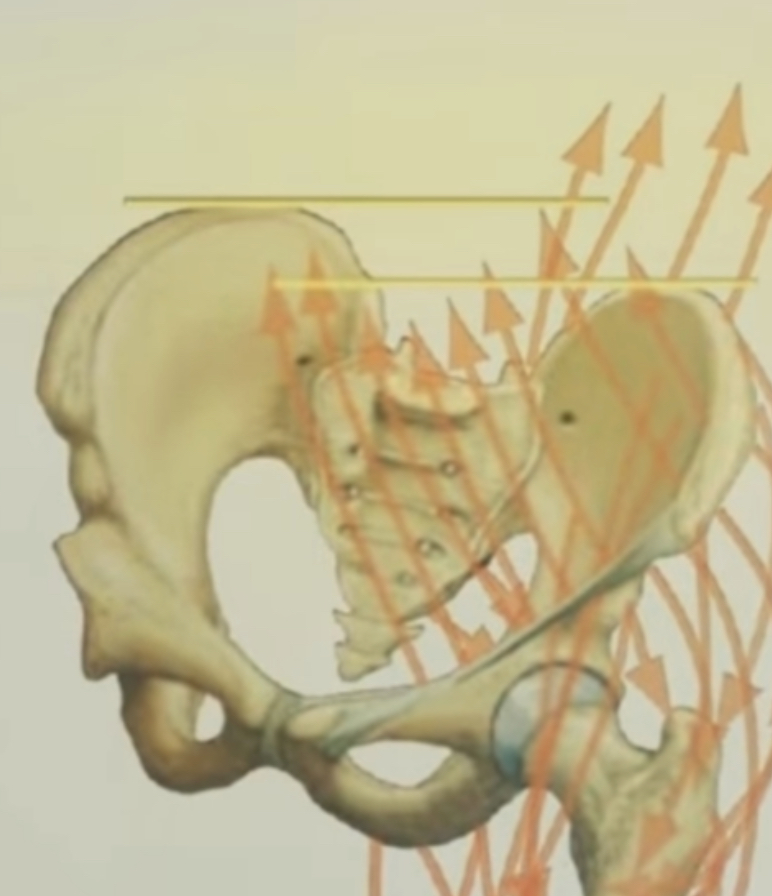
Summary. Nothing wrong with hip lock exercises. As I said. Any one leg exercise is good. But are they contrived? And is there a more logical evidence based progression? From gymnasium exercises to running drills and plyometrics then to running and sports? I think so. That’s my opinion. The hip lock concept ( like the hamstring tantrums) seems to cover too many bases. But fits nicely into a product to sell. And gluteus medius (and minimus) is a well researched occurrence in stabilising the hip in running. Is “hip lock” sort of (but not quite) the same thing but packaged nicely with a nice ribbon?
After adequate strength is achieved in prone positions or using dynamometers or other tools with respect to Abduction/GMed it is time to MOVE ON. In my experience a more specific progression to target what a hip lock aims at, is to start with variations of single leg squats. Free standing varied range single leg squats, single squats to bench again progressed with depth, skater squats etc. The research validates this. Added to high activation of GMed is the eccentric phase of a single leg squat which is not part of hip lock gym based exercises. Isometrics is good stuff. But no proof better than combined concentric/eccentric exercises. Then ideally move to very low level single leg jumps and hops and progress or regress as needed. Some form of testing single leg is useful here. Because if GMed is strong in prone tests, collapsing at early stance in high intensity could be due to other factors. Here we start combining motor control, eccentric qualities and GMed firing. Add run drills from dribbles to a skips to variations of ‘high knees”. All types of drills. Again we can see the athlete in action and adjust techniques with drills. But also condition the athlete like plyometrics. Then obviously assess the athlete running and sprinting.
I leave you with this. Jonathan Edwards jumping 18.29. Crazy forces in each phase. Huge eccentric forces coupled with of course the ability to stabilise the hips. It all happens very quickly. Combination of motor control, power and stability (could find more words). I don’t want to use the word hip lock in this situation. Makes no sense to me.
 loris bertolacci