AFL fitness, Sports Science and Collingwood!
Has Collingwood got the most amazing sports science program or is AFL success cyclical? How did St Kilda nearly win 22 games in a season? In the end lost a Grand Final by a bounce or two each year! David Buttifant is an awesome sports scientist and fitness specialist. I studied with him and he played AFL and did Track and Field. Smart guy! Real smart and experienced and well resourced. Add the practical background of Michael Dugina and the backroom at PIES and you have a potent mix. Jake Niall wrote an article in the AGE ( June 19) on Collingwood, fitness,substitute rule and ages. An excerpt below:
Feathering the Magpie nest. “Collingwood’s major advantage in a sub rule system lies in the fact that it has a higher fitness level than opponents, and it is able to maintain a higher intensity. To a degree, this is because it has an even spread of talent, but it’s also to do with the natural aerobic base of its players.
This is partly a matter of demographics. Very young teams struggle to run out games – watch the Gold Coast run out of petrol soon. Mature teams, provided they’re not too old, have the benefit of multiple pre-seasons.
Most of Collingwood’s core players – Scott Pendlebury, Dale Thomas, Dane Swan, Travis Cloke, Heath Shaw, Harry O’Brien, Nick Maxwell, Luke Ball – are in the prime 23-27 age bracket. The more physically vulnerable 28-and-overs – Alan Didak, Chris Tarrant, Ben Johnson, Leon Davis – aren’t as numerous and, in most cases, have good endurance. Youngsters Steele Sidebottom and Dayne Beams, too, have huge aerobic engines.”
Read more:
http://www.theage.com.au/afl/afl-news/feathering-the-magpie-nest-20110618-1g994.html#ixzz1Pg52Io2z
Interesting article. BUT! What is a huge aerobic engine? Does Jake mention Repeat Speed! Does Jake mention High Intensity Intermittent fitness? Ability to tolerate lactic? Leg Strength levels that carry players with grunt?
So what is the aerobic base required for AFL? We all know that too much aerobic training slows you down. How then does Swan come on for 6 minutes and explode? They key is a blend of aerobic ability and a unique blend of fitness qualities that allows a player to repeat speed. For example if a player has an aerobic capacity OR tank that is for example a MAXVO2 of 50 ml kg min then that player needs some intervention over a few pre seasons. But when a player has developed a reasonable aerobic base or tank ( for example 59 ml kg min) then the ability to repeat speed and tolerate high anaerobic levels is the key.
Does geelong now live high, train low without getting the initial adaptation of going to Arizona? That would still give you a few % per player that underpins the ability to recover from repeat efforts when resting. Proven.
Without having a clue I think there would be a few teams that would beat Collingwood as a squad in a TAN RUN. Confused? Remember the key is the ability to repeat efforts and speed. Keeping your aerobic capacity topped up will help that for sure. If Dustin Fletcher has to chase opponents all day he struggles to repeat his amazing speed because he is a gifted power athlete. IE His aerobic system is slower at churning out ATP because he hasnt got a “BIG TANK”. But huge aerobic beasts Collingwood? Not sure. Maybe a bit of adaptation from Arizona & LIVE HIGH TRAIN LOW without slow twitch training. A few would be aerobic beasts I think like many teams. But also beasts under the squat rack.
Cameron Ling is an aerobic monster. You would have to camp on Mt Everest and do high knees for a month to achieve his levels. And he can repeat speed. But ,slow speed! Joel Corey is the perfect intermittent sport athlete. Good aerobic capacity, good speed etc. James Hird also was a potent mix. Not elite in any fitness physiological traits but a bit of everything. Good 10m, OK jump, good aerobic etc. But an aerobic beast? No. Maybe a decathlete who could run a 4 15 1500 and 11 sec 100m and throw a shot 14metres.
Tough area sports physiology. Remember. Repeating Speed. Repeating Effort. Could the Brisbane Lions out labour the Collingwood players on a worksite? More confused. Could Gold Coast outrun Collingwood in a 5km run at Surfers Paradise? Probably yes. Confused? Altitude, leg weights, repeat speed. What a mix!
The average MAX VO2 for AFL teams does not alter a lot. The average age of teams is a constant. Other physiological variables alter heaps with teams from preseason to inseason and different programs. And then, then there is RECOVERY. Now that is one thing the PIES do well.
Remember don’t believe everything you read! And go to a specialist if you have a specific medical problem and not a GP. Jake you are a great journo and a budding sports physiologist who needs some work experience to fine tune your understanding of AFL fitness needs.
AFL Injury Rate increases in 2011. Why?
Interesting is the article on May 5th in the Age where Hugh Seward spoke about the plan to reduce injury with the new substitute rule.
Injury Rate “fortified” sub rule decision: (Samantha Lane , Age, May 5, 2011)
“Anderson said the number of tackles per game had declined so far in 2011, which was a significant trend change given the figure had been rising steadily.
Dr Hugh Seward, a co-author of the injury report, forecast better times ahead in light of the substitution rule changes.
”I’m hopeful that it will reduce the rate of injuries but it may take us several years to see the impact of that,” he said.”
Read more:
Then Michael Malthouse came out and said that there was evidence accumulating with injuries linking the new sub rule. Hugh Seward admitted in another article that it would take 3 years to really make sense of it all. I agree with Hugh.
But injuries are up. Usually injuries are multifactorial. So what other factors may be adding to this crisis?
1. The “press”? Who knows. This requires greater high intensity work to get back and then cover space explosively to lock people in. Could this be the reason teams open up at the end? I think Collingwood knows this and waits and presses and then “whack” open the game up. But the need for greater high intensity running has increased with this copycat trend that has occurred.Something has to give. Dumb tactic really. Will be heavily exploited soon. Not even the Kenyan Distance Running gurus can sustain that stuff.
2. Clubs now also are not afraid to do more leg weights and power work along with high intensity running. Leg Weights do not cause injury BUT increased power and ability to accelerate and collide has increased. Lots of players have pulled together the ability to lift and also maintain their football speciifc endurance. This is a massive trend. I did power weights and legs en masse at Geelong from 2000 to 2006 ( and Essendon 93/Collingwood 94/Essendon 95 to 98), whilst many clubs were switching from endurance to core to RSA to etc. Now a player has to be like a Decathlete. More WATTS mean higher momentum and more BANGS and more stress on tissues.
SO when looking at this trend ( too soon!) one must look at all the changes occuring.
It is amusing that the initial AFL biased research from “researchers” in 2004/2006 approx tried to change the game to a slower version. So funny. These researchers are like going to Marriage Counsellors that have never been married and are virgins. Strength and Conditioning Staff simply pushed hard and developed strategies to produce more powerful players capable of running more often at higher intensity. Coaches adapted these changes to create strategies to complement this OR vice versa. The Crows got left behind in an “aerobic” past.
So look at all factors and wait a few years for trends to become facts.
Multifactorial is the key word.
Saverio Rocca at our Centre
Great to have Saverio Rocca trialling the faicilities at our new centre and around the northern suburbs. The centre will be called A D V A N C E D A T H L E T E P E R F O R M A N C E when we open and myself and Piero Sachetta are setting the place up. Below is a link where Savs career is outlined. My dad coached him in athletics when he was a young champion thrower. Then we met again when I was the fitness coordinator at Collingwood Football Club in 1994. We then met again when he was delisted from Collingwood and Mark Thompson sent me to have a chat about him coming to Geelong. The deal fell through and that was a pity. Amazing chatting to Sav about how tough it is in the NFL. He is very dedicated and strives to keep an edge. And wow he is flexible. Below are a few pics of centre also.
WIKIPEDIA LINK SAVERIO ROCCA
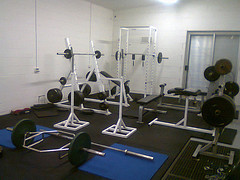
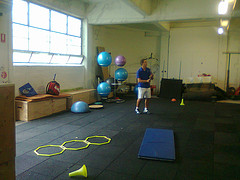
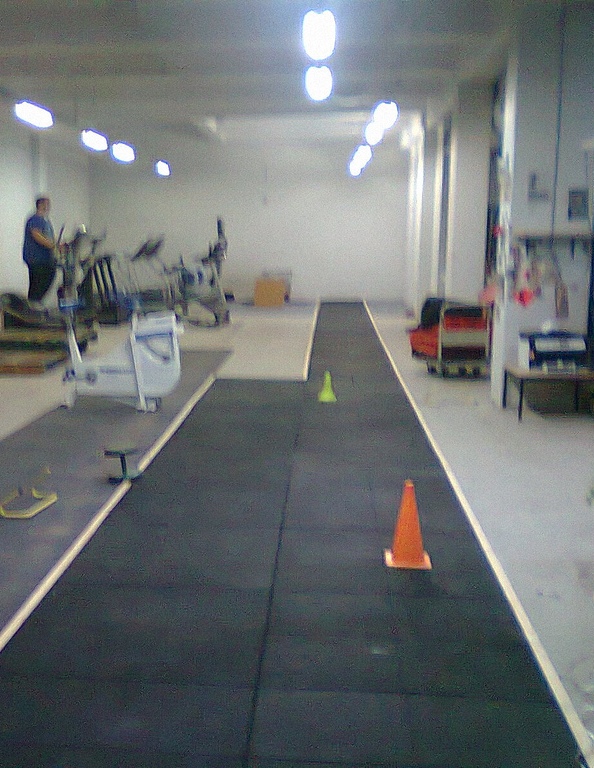

Current Pennant Tennis in Victoria
I am aware that some clubs pay quality players to play Pennant in Victoria. But from my information it simply is a small amount of money relative to what is needed year round to sustain travel, food and accomodation. Added to this is the tyranny of distance so that players miss tournaments and in effect gain little amounts, unless they are at home doing nothing.
Also I understand these clubs do their best. It is just the system, marketing and timing of Club Tennis that needs revamping in Australia.
Club Tennis in Australia and ATP rankings!
Players cannot play Pennant Tennis in Australia and get ATP points. Nor in Europe. But at least in Europe players can play for their clubs and make lots of Euros. Good money exists in CLUB TENNIS throughout Europe. In Australia we have the AIS and High Performance programs underpinning tennis development and they do a great job. BUT! So young and so removed from senior ranks.
What is missing is the fact that the average age in ranking lists is 25. Plus or minus but exactly like other sports. Now if a good player is 17 years of age in Australia and you tell him to hang in till 22.5 before he or she makes a breakthrough, you will lose business as a coach or fitness trainer. That is 2016 approximately. Phew! But that is the equation 90% of the time.
So when players spin out of these AIS programs or Development programs due to many factors such as injury, age, poor form, poor perceived potential, their own decision etc, they are often on their own. Highly ranked players do get some funding now but again I am talking about 18 to 22YO ranked from 1000 to 200 approx.
So then the problem becomes finance. Even those that can afford the process find it tough. What about an 18yo from an average family that has an income less than $70,000 total and has already invested heavily in their son or daughter since 7YO. Too many people in tennis in my opinion think everyone earns $250,000plus and has massive amounts of money. My GUT tells me that our tennis talent resides in a lowe socio-economic strata. Just too expensive a sport. The odds of making it are close to zero and the cost is frightening.
So at 18 and often devoid of assistance this player then has to decide. They may be ranked 701 in the world which is ok. They can play a bit. They still believe in themselves which is crucial. So how do they afford coaches at $70 an hour, racquets, travel, food and ongoing educational needs. Parents have had enough. Often splits families. The player cannot earn money because of the silly ATP/ITF schedule that requires huge funds to travel and earn points.
We have very few good tournamants in Australia and the PRO circuit is too spread around irrelevant venues and costly again. Why not have the PRO circuit in Sydney and Melbourne where players,coaches and facilities are concentrated? It costs a huge amount to get around to Darwin and Berri etc.
At least in a country like Italy, players can play Club tennis and earn enough money to propel themsleves around the circuit. It is so easy to travel in Europe. Siriani has underpinned a career using this method and in Europe players working their way through the rankings use this method to stay alive through the crucial early 20’s and even 24 to 26. Forget the TOP 10. We know prodigies come early. That is another quest. To find the Agassi or the Nadal. That is why TA is working hard in promoting TOMIC. he is a talent and has the potential and is 17.
What I am talking about is TOP 100 and TOP 200 players.
We do develop young talent but it simply is the most expensive sport and least rewarding sport I know to play. A top 300 player in the world loses money. What a weird sport. Who can afford to lose money? Top 300 in Soccer. Phew. Top 300 in Soccer invests in real estate and Top 300 in AFL does very well also from day one!
So we need to develop CLUB TENNIS in Melbourne and Sydney and it has to be a tight and very lucrative schedule where OZ players can make good money that they then can use to uderpin their year.
I cringe when the OLD GUARD say our players should learn to struggle. Sure they should do it hard. But lose heaps of money? No! And should their parents foot bills. No! Not when so many make money out of the business of tennis. In some ways I am a hyporcite because part of my income is helping tennis players with fitness. But that is the equation. It costs money to improve in these sports.
Added to this is the expensive and non lucrative PRO circuit around Australia. A sure way to get the odd ATP point and see Australia and lose more money.
So I really think that CLUB TENNIS is a fundamental thing that does exist in Europe and does finance MATURE AGE players. No reviews or studies are needed. Just go to Europe.
If a player could bank $30,000 a year playing 2 to 3 months of Club Tennis this would provide incentive to young players in Australia to keep playing and not throw it in often a year or two before they are ready to blossom.
After all how many people go to work at TA to lose money?
Perceived Exertion Rates, Loadings and Tennis
I have used the RPE system first devised by Foster since 2001. I kept databases galore and by 2004 had found some trends using the system. When GPS data was added it seemed we had a powerful tool to get some bearing on loads in AFL training and games. All old hat now. Some clubs use some other markers and systems and many now categorize drills using RPE & GPS and coach/player feedback.
Tennis is a unique sport. It has high eccentric demands and can last for hours. So all energy systems contribute. But tennis players seem to train so much more and play more often than AFL players. I have kept some preliminary loadings and had one player doing 10,000 units 2 weeks before the OZ Open. Amazing!
Now I will not enter into an analysis of actual time trained and distance covered or TRIMPS etc here. Reality is they train heaps and often on hard surfaces. So of course there is no body contact and thus I would assume CK levels would be lower. The Skill Set required is the main factor but do they enter tournaments often at 90% power and speed levels?
Now how much work does Federer and Nadal and other top 20 players do? Do they periodize more and do they train for 120 minutes but at an RPE of 3 and thus 360 units.
The information is so blurred in Tennis and more research is needed on loadings. That is the critical information. How long and how hard? Reality is very few players make it and so many get injured despite the lack of body contact.
There is some uniformity with loadings information using various methods in Team Sports now. Also there is lots of evidence now with Track and Field and sports like Triathlon.
Aaron Coutts was involved in an N=1 study 2 years ago at Paris Open and the loadings there were fairly similar to what I saw in AFL. But so far my own experiences have seen LOADS of 4000 occuring quite often.
So are players on the circuit over reaching? Especially the 100 plus ranked players.
And young players? What is the optimal load?
Lots of scope for research in Tennis with Loads as against Periodization. What do the best do? Tough sport this one.
Women’s Volleyball will always be bigger than AFL. Much bigger!
In fact that should just be Volleyball ( Men’s and Womens combined). Just food for thought re MultiNational sponsors. Whatever AFL does with expansion it will never compare with the global nature of Volleyball. Same with cricket and netball. One cannot benchmark Volleyball (& tennis/track & field etc) against Cricket or Netball or AFL given it is played in every country.
AVL Women’s Volleyball Finals 2010
Went to watch the AVL finals at Dandenong today between UNI BLUES and WESTERN AUSTRALIA. My daughter Lauren was playing for UNI BLUES. Anyway very good match and went to 4 sets. Western Australia were great and won again. Awesome performance given UNI BLUES threw heaps at them.
What staggered me was during the medal presentation it was mentioned that some of the players were up to $3500 out of pocket to win a National Final. This is arguably a sport which is in the TOP 3 for participatants wordwide. Olympic Sport and Worlds are massive competitions and professional Volleyball exists Worldwide. Then add Beach Volleybal. Massive and just great to watch.
In Australia we have 3 sports which are massive. AFL, Netball and Cricket. I watch all three and great to watch BUT lets be honest. 2 are Commonwealth Sports and will always be so and one is “just” a National sport. But within the OZ market, sponsors queue up given the tribal nature of the sports, and the media exposure ( or maybe protection) these sports get. AFL has dreams of world domination but methinks it is more about brainwashing the locals that this is occurring.
But young athletes have to be careful. There are massive opportunities appearing on the world scene with elite sport. Look at Soccer and Basketball! In the US there is a far bigger population and really they only have one tribal sport. NFL. And they have College which gives kids in many sports a chance. We have a tiny Institute program that drops sports if they dont perform. How does that work when Volleyball is a massive sport for women in the world? How can you benchmark a Commonwealth Sport versus a truly International Sport?
The fact that this final was not televised live was odd given the game had more international relevance than netball and more so was great to watch. Young AFL players are being lured by the big money available. But to be honest I dont get it. Some of these kids could be great athletes representing Australia on the big stage. Money can always be earned and also opportunities are starting to open up for careers overseas where in fact money can be earnt. So many dreams will be shattered. After all an AFL player can only play against the IRISH Internationally and the only real competition in Netball at this stage is against New Zealand.
I am not a marketing person but Australia is a very small market and maybe sponsors need to look long term and divert money from sports that really are played in a very small “FISHBOWL.” Tennis is now a massive sport played in every country but one goose of a ‘FISHBOWL” journo recently said OZ tennis players couldn’t hit the ball over the net. Trouble is these “gooses” have a lot of influence in OZ. But sponsors maybe need to realize that Globalization will explode in sport. Even though many local journos criticized the WORLD CUP, no one forces millions to watch and play and cry for their teams. Some of the press was bizarre.
So in my opinion the logic is not about whether a sport like Women’s Volleyball is marketable, but more about whether sponsors and bureacracy realize, that in the long term kids are going to want to play on the World Stage once opportunites keep appearing. The best example is Soccer. Kids are dreaming about overseas and parents are paying big bucks. The dream is alive and many opportunities exist now and are increasing.
So let’s not be brainwashed by the saturation media that exists in our OZ SPORTS FISHBOWL. Things will change. Maybe AFL has a slight chance of growth in markets with Cricket Grounds BUT Women’s Volleyball will always be bigger. Much bigger!
Er nothing against AFL, Netball and Cricket! Vive le Commonwealth!
How fit and powerful is Rafael Nadal? Federer?
I was reading a few Italian articles on tennis and fitness. Julio Tous Fajardo is a sports scientist/strength and conditioning guru who has worked with Nadal, Moya and soccer clubs like Barcelona and Sampdoria. He chats about the fact that Nadal has the ability to maintain his speed at a far high level than Federer. He says that Nadal has double the power of football players?
“Nadal compensa lo svantaggio con una maggiore resistenza alla velocità.
La sua valutazione della potenza è due volte superiore a quella di un buon calciatore”
Aerobic power or pure unadulterated power? Some articles mention he has a MaxVo2 of plus 70 ml/kg/min and combined with his weight and strength this makes him lethal. There are others that chat about his power output using specific machines in watts.
Other articles in Italian chat about Paganini ( federer’s fitness guru) and Federer. They mention half squats of plus 150kgs and the ability to keep up with Swiss sprinters over starts. Trying to work out his aerobic capacity from what he mentions, suggests he can run approximately 11 minutes for a 3km.
Now all this is hearsay. Agassi is supposed to have benched 140kgs? Run up hills?
In Track and field we often get quite accurate feedback on what athletes are doing on the track and in the gym. Just part of the ethos and chit chat around track and field. Also so many people train together so information is disseminated and it is part of the day to day conversation in track an field.
Julio Tous Fajardo chats heaps about using machines and specifc devices such as Versa Pulleys and Flywheels more than weights and seems to base this on the fact that tennis players are prone to injury and also cannot get continuous training with fitness and strength and conditioning.
So as a result there seems to be much confusion with tennis on what to do. Little kids are heaving weights and others seemingly are pulling therabands.
It would be great to get some more specific feedback on what people are doing in training, but maybe the nature of the sport means this is tough, and also there seems to be so many ways to achieve the fitness needs required.
Oh well, I will keep asking around. In the meantime dont panic. Remember that a muscle just contracts and doesn’t know if it is playing tennis or is on a fancy machine. It just contracts. So just train sensibly.
But it would be nice to know exactly how fit and strong Nadal is!
Kevin Bartlett and Fitness Advisors in the AFL
I listened to SEN yesterday where Kevin Bartlett and Darryl Wakelin spoke about fitness advisors in the AFL after Mark Williams and Port Adelaide claiming overtraining in preseason caused problems in 2010.
Overtraining caused injuries: Williams
When Kevin Bartlett brought up Peter Grant and 1979 and Richmond I nearly choked on my Ravioli. I remember he spoke about how Grant pushed them too hard in his first year but softened the next and they won the flag. Darryl Wakelin referrred to how about teams get to the end of preseason ( or closish) and often can feel worse than at the start. Then again in general terms the interview suggested that fitness people were often not in touch with the demands of the game for want of a better explanation. Anyway if you listened that was the general trend of the interview.
Just odd.
People like David Misson at St Kilda and David Buttifant at Collingwood use Sports Science, data and any feedback they can obtain to manage loads and players as effectively as they can. This happens at most clubs.This would happen at the World Cup behind the scenes. Years ago we saw the AC Milan LAB and now that is old hat. Phew. Peter Grant! 1979!
I felt that listeners would listen to this interview on SEN and then think that fitness gurus in AFL clubs ran around like RAMBO and impose their will on players. Instead there are meetings after meetings with medical staff and coaches to try and get Loads right in probably the most demanding team sport in the world.
I was privy to the opposite claims in 2006 which were the opposite end of spectrum. Anyway I found these links on Google which relate to undertraining rather than overtraining, so have a read if you want. The reality was that Brian Cook was chillingly correct in his 2006 review on fitness and I couldn’t agree more with what he said . Remember though that winners are always grinners whatever the facts may be.
http://www.thecattery.com.au/Multimedia/GFCLetter_060928.pdf
http://www.thecattery.com.au/Articles/25112006_2.php
So Undertaining or Overtraining or Live on the edge or just off the edge?
The main thing is to have a mature side with lots of experience and a well funded club with great resources. Then the best of these teams wins, whether it is the best game plan, or smartest players, or most skilled kicks, or luck, or best managed, or whatever variable that discriminates teams.
So it is great fun being a fitness person in the AFL but every now and then logic defies physiology!

