Australian Tennis. What is the problem?
I have had a reasonable insight into tennis since about 1990 given then I had an association with Michael Baroch who is a well known coach. I assisted quite a few of his juniors for a few years and in the past 2 years have again had some gigs with some junior players with their fitness programs. I also worked with Ann Quinn at Essendon Football Club and again this provided me with some insight into the sport.
Many reasons come flying around this time when we seem to have less and less ranked players. Yet at the Olympics we seem to do well in some sports. Without going into it too much they are usually sports that have really benefitted from the Institute set ups and sports science back up.
We do not seem to have had too much success in sports that require high level eccentric conditioning at the Games. That is a topic for another post but relevant to tennis.
The obvious hypothesis re tennis is that the rest of the world simply started playing tennis from the 60’s and 70’s. Yet John Alexander says we do not have courts in OZ, all I see close to home is courts and coaches. Cannot buy that argument. Too simplistic.
We also have a traditon from the good old days here, and that seems to still have an influence. I remember in AFL it took till the late 90’s for the coaches of the old VFL to embrace professionalism. Even then it was a struggle.
European nations seem to have simply evolved their tennis in line with elite sports principles rather than what the “old pros” did in the past. In Australia there a lots of kids hitting massive amounts of balls. In fact some give up footy and soccer and netball in pursuit of tennis dreams at early ages and thus are denied the mutlilateral base these kids need. Same problem is OZ exists with Little Aths which is a healthy pursuit but a waste of time as nursery for track and field.
It seems to me that coaches really make their money with kids yet when it gets to 15 to 20 the clubs do not have any resources to create pro environmnts in OZ. There is a massive gap after puberty for players that only the institutes can fill, but too few kids get there and are they the right kids?. Talent ID is really difficult in a sport where the averega age for men in the top 100 is over 25 and for women over 24. It takes time to produce players. Youth policies take time. The AFL is a bad example with the under 18 system because it is a closed National system and who gets picked plays. No one from Ecuador to beat.
Sports Science to me has not been embraced as much in OZ with tennis. That is a pity given the resources we have.
Simply some thought has to be put into creating a large base of kids after puberty and then supporting them till 16 to 20 in some system that allows them to improve. The superstar will come through but that is one player every 10 years.
Coaches must work hand in glove with sports science and fitness and not run amok with massive loads on young underdeveloped kids. Some of these kids are so scrawny.
Power and speed must be prioritized as must be technique and fine tuning, versus running around the TAN.
To say we dont have players is odd to me when so many coaches make a living coaching little kids. So what happns to these kids when the parents no longer can afford to pay for lessons at 13? And it may take a player till 20 to break into he top 250 and till 22 to brea into the top 100. That;s ok and normal in tennis.
So giving some juniors some wildcards will not solve a thing.
Interestng eh!
AUSTRALIA WIDE SPORTS CONSULTANCY
AVAILABLE NOW AUSTRALIA WIDE
PRE XMAS TRAINING PROGRAMS FOR AFL FOOTBALL, SOCCER, VOLLEYBALL OR ANY INTERMITTENT TEAM SPORTS.
-WE CAN EVALUATE YOUR PROGRAM AND DESIGN A SPECIFIC AND INDIVIDUALIZED TRAINING PROGRAM FOR THE IMPORTANT PXMAS PERIOD.
-REHABILITATION
-SPECIFIC CORE STABILITY AND CORE STRENGTH NEEDS
-BASE AEROBIC CONDITIONING AND SPORTS SPECIFIC CROSS TRAINING
-STRENGTH AND POWER NEEDS PERIODIZED
-PERIODIZED PROGRAM WORKING BACKWARDS FROM THE START OF THE SEASON IN 2009
-FITNESS TESTING SPECIFIC TO YOUR SPORT
-ALL DONE IN DIRECT CONSULTATION WITH THE COACH
INDIVIDUAL SPORTS SUCH AS TENNIS AND TRACK AND FIELD
All aspects of your conditioning needs can be assessed and programs that are totally individualized and sports specific can be designed and implemented.
* VIDEO ANALYSIS
* LONG AND SHORT TERM NEEDS MET
* SPECIFIC FINE TUNING NEEDS MET
Loris Bertolacci
Strength and Conditioning Consultant for the Australian Women’s Volleyball Program
I have worked in many sports and can come to you and/or arrange staff to meet yours or your teams every individual need. People like Jarrod Egan are available. Jarrod worked at Geelong Football Club till 2002 then the Kangaroos in the AFL then spent a year with Celtic Soccer in Scotland. He is back in Australia and is available in NSW and anywhere in OZ for any of your sports training needs.
20 years experience in the AFL
NSL and Premier League Soccer experience
Currently assisting elite tennis players from Australia and New Zealand
Successful consultancy with the Western Bulldogs in 2006/7 on their ACL injuries and Speed/Strength programs reflects my ability to also come into your organization and provide a long or short term consultancy.
INTERNATIONAL LINKS
We have international links in Germany, Ireland and Italy and can also provide consultancies in these countries in very specific areas. These are highly qualified people like Chris Dennis in Dublin who works in International rugby and recently assisted Ricky Nixon with his Irish training camps for the AFL.
HAMSTRING REHABILITATION BOOK
My hamstring rehab book has been very popular overseas and interstate so I welcome you to check it out and assess what we can do for you.
SKILL BASED CONDITIONING. IS IT ENOUGH? NO!
Small sided games and fitness through games has really made its mark in team sports training. Lot’s of work filtered through from Hockey and other sports and in AFL we saw the Adelaide Crows pioneer this approach. Nevertheless they used other means (for example ergometer work) to supplement fitness, but less formal running. But has their high injury rate occurred due to high fitness levels and poor motor patterns? Who knows? This is a bad mix and at the base of my discussion. This approach has filtered through to many sports and recently we saw a research article by Gabbett on Volleyball with juniors. Obviously “bang for buck” in simplicity is far greater when things can be combined but my opinion is that there is a downside to what seems a simple solution to fitness. Yet I have seen many problems with this approach.
We have seen an explosion in sports science in Australia and a huge influence on sports such as cycling and rowing for example. Team sports have achieved enormous benefit due to sports science, with areas such as load management, heat management, hydration and many other areas receiving enormous backup. Huge factors and load management has been a big one with GPS and databases etc.
Sports such as soccer are now creating skill based TID schemes where kids are encouraged to play heaps of games and learn lots of skills early and then they are selected later on from a larger pool of skilled players. Simple.
But we have direct evidence that the relative age effect destroys the careers of many young players and only the gifted younger ones come through (and in fact succeed more often) coupled with kids with advanced maturity that sneak through. So many good kids are left behind. That is kids that are born early and who survive due to talent, do well at elite level. On the other hand the “bruisers” with no talent also do well as well as older kids. So many young (born early) players are lost and this is mainly a physical factor due to maturation and/or training.
And look at Tennis. We have a massive generation of players whose parents have mortgaged their houses for coaching and yet no result so far.
Sports Science has been little assistance to track and field. The scientists would say that the coaches do not want to listen. But my opinion is that the sports scientists have little to offer because very few really know how to create advanced athletes. Sports Science is awesome at telling us how to manage a player in Malaysian heat but has little idea how to propel someone over 2 45.
In team sports like AFL we simply aimed at the average. One needs to be good at many areas. Intermittent sports require a broad long term base of conditioning and good acceleration and a sufficiently developed aerobic system to assist repeat efforts. Average to OK in the gym and average to OK in power. All achievable and in the end injury management becomes a key as does talent. My experience in all these team sports is much the same. One usually does not need to create super athletes. But if a team has a core of players who have talent and also have developed all their fitness skills (running/jumping/change of direction etc) then that team should always beat a mob that can play and are fit but lack “fitness” skills. Always the same principle. All things being equal, one factor will make the difference.
Getting back to tennis, my opinion is that strength and conditioning and fitness are simply massive factors why we are falling behind in many sports. And this needs to happen early. Puberty. And by then kids should be fully developed in all facets of running and jumping and change of direction and also have a broad base of conditioning. What we see in OZ is a huge number of skinny kids with good aerobic qualities and one sided bodies coming up against explosive “Europeans” and now Asians. Forget what happened 30 years ago. No one played tennis.
And with all due respects let’s not really consider many sports in OZ like netball and cricket and AFL because they are not played on the world stage. Our female basketball improved when they started all going OS. So there is nothing to compare here. Even Rugby League is limited in exposure. Rugby Union is only now starting to go PRO all over the world and we will see the effect of that in ten to twenty years.
In Athletics we do not have coaches for kids. Kids are not taught. There are other problems but it is difficult to change bad habits. In AFL usually paid and competent fitness personnel spend 2 to 3 years fixing up massive deficiencies in players from 17 to 20. And that works and we see a reasonable product by 21. That’s ok for footy and then add some skills based games for fitness and VOILA …Fit and at 25 yo the team wins games.
We have seen the push to work a lot on agility versus change of direction. But my experience was that the freaks (e.g. Gary Ablett) had it all. Ability to change direction, balance and then vision and skill.
In Volleyball all I see is skinny little frail kids jumping around and getting fitter BUT reinforcing very poor “fitness” and neuromuscular habits. Once ingrained hard to change. And Volleyball is a real sport. Played everywhere. Lot harder to succeed in than cricket and netball and AFL. So strength and conditioning at an early age is now in my opinion an absolute priority. We must have players ready at 16 to 18 to explode on the world stage. In AFL they usually cannot squat with a broomstick at that age and it doesn’t matter. One has time in the cloistered environment of AFL. But in tennis and athletics and volleyball and soccer, there is no time. Be good early or perish. So know how to play the sport, make decisions on court, do the clean and jerk and bound through the roof. Not balance on a swiss ball.
I have spent 15 sessions with an elite junior soccer team (12 yo) and have done 45 minutes a week of running technique and core and balance work. The results have been great and now many players are starting to challenge other players in state teams from other clubs. The coach says they are more explosive, balanced and change direction. Add skills and decision making and a talented player assumes their right position. And the young boys like doing it as long as they are not being flogged and they are learning and having fun.
The skills based approached in my opinion can be lazy. Simply get heaps of kids doing the sport and see who comes through. Chuck them a ball and let them play. Of course they will get fit.
It is obvious that one has to learn the sport early and learn to make decisions. We know that multi lateral development is the key at least till puberty. But the missing link is strength and conditioning and movement education at an early age. And core development and balance.
Of course if I get kids to play all day at 100% pace in the backyard chasing dogs and jumping fences they will improve in their vertical jump and 5m tests. But we need to slow down and realize that life aint that easy, and ask the question why we struggle in so many sports.
I think sports science has to slow down a fraction and ask the question “Can I get a male volleyballer to vertical jump 95cm?” or a tennis player to explode sideways and drop their centre of gravity and smash a forheand back to NADAL. Having good salt balance in a drink at Wimbledon will not help if you cannot get to the ball.
Let’s remember that the best coaches are ones that combine ART and SCIENCE.
I love sports science and in fact if we can attend to the strength and conditioning issues at a young age and have skilled kids ready to go at 14 to 16 we will dominate the world. My opinion.
So in summary.
Do everything in development. Zero shortcuts.
And forget non-international sports and non eccentric sports (circling/ rowing, swimming, kayak etc) when comparing and or using sports science.
Ciao
Loris
Brisbane Lions and Development in the AFL

Here you can see the changes that occur in 2 to 3 years. Whilst Brisbane had a good average age in 2005 their distribution was poor with too many young players and too many old and no warriors. In 2008 we see a team that is too young on stats to win a flag but developing perfectly with a core of players coming through and when that BELL CURVE or PEAK hits 25/26 and 100 games they should be very close. So this seems to be the model required for success in the AFL unless one is lucky or simply has heaps of older or younger champions. Geelong fits this model perfectly and in 2004 had too many young players. So this type of analysis and planning is the key it seems plus add good players and all the other factors mentioned in the previous article on development.
Development in the Australian Football League AFL
I recently listened to Kevin Bartlett and Peter Daicos on SEN talking about development in the AFL. Daicos spoke about the importance of development. It was interesting but still missed the real factors involved in long term development in any sport really. In the end the discussion focussed too much on one or two years.
The AFL is a sanitized and manipulated sport. And so one cannot buy teams it seems. We have seen teams try to mix and match in the past few years and develop on the run by recycling some players. This simply has not worked. Most teams that have won flags recently have stuck with a core of players and worked through almost 10 years of development. West Coast Eagles started a restructure in the late 90’s with their list. Sydney had been though a lengthy period with a mature group before crashing through. Port Adelaide the same with a very mature group. Many years of pre seasons and heartache. And more so waiting till the core group was an average of 25 to 26 years of age with really good proven veterans and quality young players mainly from 21 to 25. Thats it. Add to that what seems to be a need to have some money floating aound to service the team with needs such as medical, fitness, massage and other critical needs. Clubs such as North Melbourne have certainly not delivered given they simply have not had resources in my opinion and yet have been thereabouts. I always use a seemingly trivial area such as massage to point out the need for resources. I am sure the power clubs have massive budgets for massage whilst North would have very little. This is not a 1% but may be a .25%. All adds up by finals.
Time and time again we point at reviews or culture or other totally nebuluous and subejctive concepts. If the team has a core of hardened players that have an average of 6 pre seasons and some finals experience one has a chance. If they average 100 games of AFL footy the chance increases. If the club is well financed the chance increases. If there is some relative and current political stability then the chance increases. We have seen recent examples of clubs winning flags with supposedly poor cultures so I query that one.
We are talking about young men who represent these clubs, but with mature bodies. Every club has a leadership group now but someone has to finish last. If the club can get on a winning role then usually everyone is happy including media and supporters. Added to financial stability this helps . Then clubs make good decisions when in a positive frame of mind and the positive cycle continues. Teams that lose a lot usually meddle and overtrain inseason. More disasters. Young bodies. Old bodies. Stress. Crash and burn.
When teams are firing, bodies are mature, but still vibrant and fresh, less injuries occur. It simply is less stressful. And when less injuries occur there is less drain on the current list and so again less wear and tear occurs and the load is evenly distributed. So less injuries.
Without talking about the science of it all, there is no doubt that a positive frame of mind can assist the avoidance of injury and illness so the whole cycle becomes “virtuous” and one is on a roll.
It takes a glut of injuries or total political instability and some losses to upset this “happy” cycle. Does happen and recent events have demonstrated this. Or in the end your best players are too old and young players too young and there are no warriors in between. By 2005 this was Brisbane. And did Adelaide lose their opportunity to win in 2006 with an injury glut at the end of the season Maybe? But now they seem to have old players and young players. So do they make a decision to go into a long term development phase or do they keep trying to have a crack by mixing and matching given they are so weel resourced and well coached. Tough eh! And is the Bullodgs now reasonable well resourced and with a quality core gorup at the right age? When I did my consultancy on their ACL injuries in 2006 at the Bulldogs I can assure readers that their resources were light years behind those of Geelongs without elaborating. It was tough for the players I thought, after having worked at Essendon. Colingwood and Geelong.
So development means that over time players have pumped weights, run miles, made heaps of decisions on the ground, learnt their skills from coaches, grown up socially and been involved in a vibrant well resourced club. After all there have been some excellent cultures with clubs that are poorly resourced and they do not seem to win.
Remember it takes time and in the highly controlled AFL compettition, 9 times out of ten one simply has to get the best players together at a young age, train them properly for 6 to 8 years and make sure the business is ok. You won’t win with a bunch of 23 years olds or a bunch of 28 year olds and it seems you won’t win with a paupers budget. And this is the AFL not Premier League Soccer where the best can be bought so the AFL’s contolled environment allows for objective analysis.
And then those 25 year olds have to be good players with the odd star. And really the 22 games is the accurate reflection of development. The finals are a slight lottery. And yes other things have to be ok, But get long term development wrong and fight nature and forget it.
Simple. HA.
Loris Bertolacci
Womens Tennis Rankings and Ages 2008 Jan Top 100
CLICK ON THIS FILE AND CHECK THE AGES FOR JAN 2008 in WOMENS TENNIS.
| Ave 100 | 24.3 |
| StDev | 4.1 |
Top 100 womens in JAN is approx 24.3. Pretty much always the same. So why wouldn’t one create a developmental model simply on what happens year in and year out in any specific sport. My research and presentations to the Geelong Football Club Match Committee in 2001 was that the average AFL Grand Final Team was 25.7 and each player had >100 games on average. Only 3/4 < 22 etc etc. This model repeats itself in AFL with the odd clanger as happens in nature. Below is a lecture I presented at an AFL conference in 2002 on development simply using ages as a guide which relates to all sports.
And so in tennis the womens rankings seem to vary between 23.6 and 24.5 over many years. They seem to come in at 21.5/22 on average and go out at 27 on average.
And if they can come good before that go for it. There are no rules. No stable developmental stages as people like to construct.
But the reality is that it seems to take time. On average. Agassi was good at 16 and good at 35. He was not average. Thats the point.
So the same theories stick. There is room for the 18 to 20 yo but seems they have to be pretty good and still seems 20 plus is the norm for getting into the elite “on average”.
I have put the teenagers in green. About 13 or 14 teenagers in TOP 100.
Development and Tennis in Australia. How Young?
Teen shows how to move up from junior ranks |The Australian
Margie McDonald | January 07, 2008
said Liz Smylie, former Tour player and now tournament director of the …Tennis Australia, under CEO Steve Wood and player development director Craig Tiley …
Recently this excellent article was in the Australian. All good. But in sport there is a certain inevitability with maturation and ranking lists. It does take time. These types of articles are correct in general but subjective in nature and somewhat emotional even. Of course we want to get kids into ranking lists ASAP but history and raw hard data doesn’t support this.
Analysis of womens tennis rankings year in and out show simply that it takes until well into their 20’s to crack the top 100. Sure some real talents can shine early but very few.
tennis-ages-2005-aug-and-2007-jan-1.pdf
tennis-rankings-2003-aug.pdftennis-rankings-2003-aug.pdf
development-russian-tennis.pdf
These stats are a bit rough and I will update them soon for 2008 but simply show some trends with development and how long it really takes. A 15 year old who is not a star might have to wait till 2015 to crack the top 100 and be there for a year or two. Daunting but the stats support this. She would be 22! Still young.Close analysis of development in Russia shows they seem to be 2 years ahead with their girls but still 21.9 average age for their top 100 girils. This was a year ago as are all my stats and year to year these change a bit but not much. So don’t hang me as I will update this year soon.
Now one can even look at top 500/1000 russian girls and we dont see millions of teenagers as is often subjectively reported.
Then have a close look at actual ranking lists. Yes they change from year to year but not a lot. In the girls, on average they seem to drop out of the top 100 at 27 and go into the top 100 at approx 22. Forget superstars. Australia does not even crack it for heaps of “average” players these days given the world is playing tennis now. One constant in life is change.
What does it all mean? In AFL it simply takes till players are 25 on average to peak. Also teams in all sports. World Cup Squads in soccer are 27 plus.. Very few teenagers play in finals. Some do. Not many. Always happens. Takes 6 to 8 years to develop a team.
In sprinting 26 is the age! Males and females. And so on.
So in tennis we are imploring our 12 and 15 year olds to push into the elite level. That is OK. Yet when one assesses these kids that can play a bit some cannot even do a basic bodyweight squat. They play heaps of tennis with paid coaches in the suburbs but there is very little proper development. One sided development and biomechanical disasters. Some are ok with fitness but movement mechanics and core strength and stability. Well!
So all of a sudden our girls are miles behind. No use smashing them with runs around the TAN or PLYOMETRICS if they cannot do the fundamentals at 16 or 17 let alone 13.
Added to this is the fact that even with excellent devleopment schemes from 12 to 16 it will still take most girls till they are 20 plus to crack the top 100 let alone the top 500 sometimes.
I think the problem lies in the fact that in tennis the coaching of fitness is very very poor at the youth age with little emphasis ont the basics ( core / footwork / technique / weight training and so on). Thsi is a different issue to fitness. Also in my opinion our kids shoudl be encouraged to play many sports till 13 or 14 and then specialize.
Thus they would be naturally fitter and stronger and more balanced. But an industry lurls out in the suburbs that means tennis coaches may not encourage this multilateral development.
Even sports like swimming and gymnastics as well as netball/basketball and soccer should be played by these girls to make sure they are tough fit aussies and not one sided underdeveloped little girls.
The other problem is from 16 to 19. This is a tough age. this is when the “average player” will push through the rankings. By then though the parents are either bankrupt or divorced having funded their kids in tennsi for years. HA.
But at this age kids are growing up and it is tough to stay “bubbly” till 21 until they crack the next level. There are few professional clubs in OZ and systems at this age and people are often edgy and impatient for results.
So these are just general thoughts and I will redo the stats for this year soon and may be surprised. I am sure TA knows all this and also have fantastic steps in place.
But it is a different tennis world to the 50’s/60’s and 70’s. We seem to keep saying we have great sports science in OZ but I think that we may be a little behind in practical strength and conditioning. That is another story.
Volleyball Base: A new conditioning site for Volleyball
My daughter Lauren Bertolacci and boyfriend Dave Jones have started a conditioning site called Volleyball Base.
http://volleyball-base.com/blog/
They are now very experienced athletes but also have worked professionally in conditioning and rehabilitation. Their site will be very practical but also provide great information on integrating sports science into the game of volleyball. Lauren is NO 6 playing with Fighting Kangaroos in Germany and Dave is playing with Liepzig.
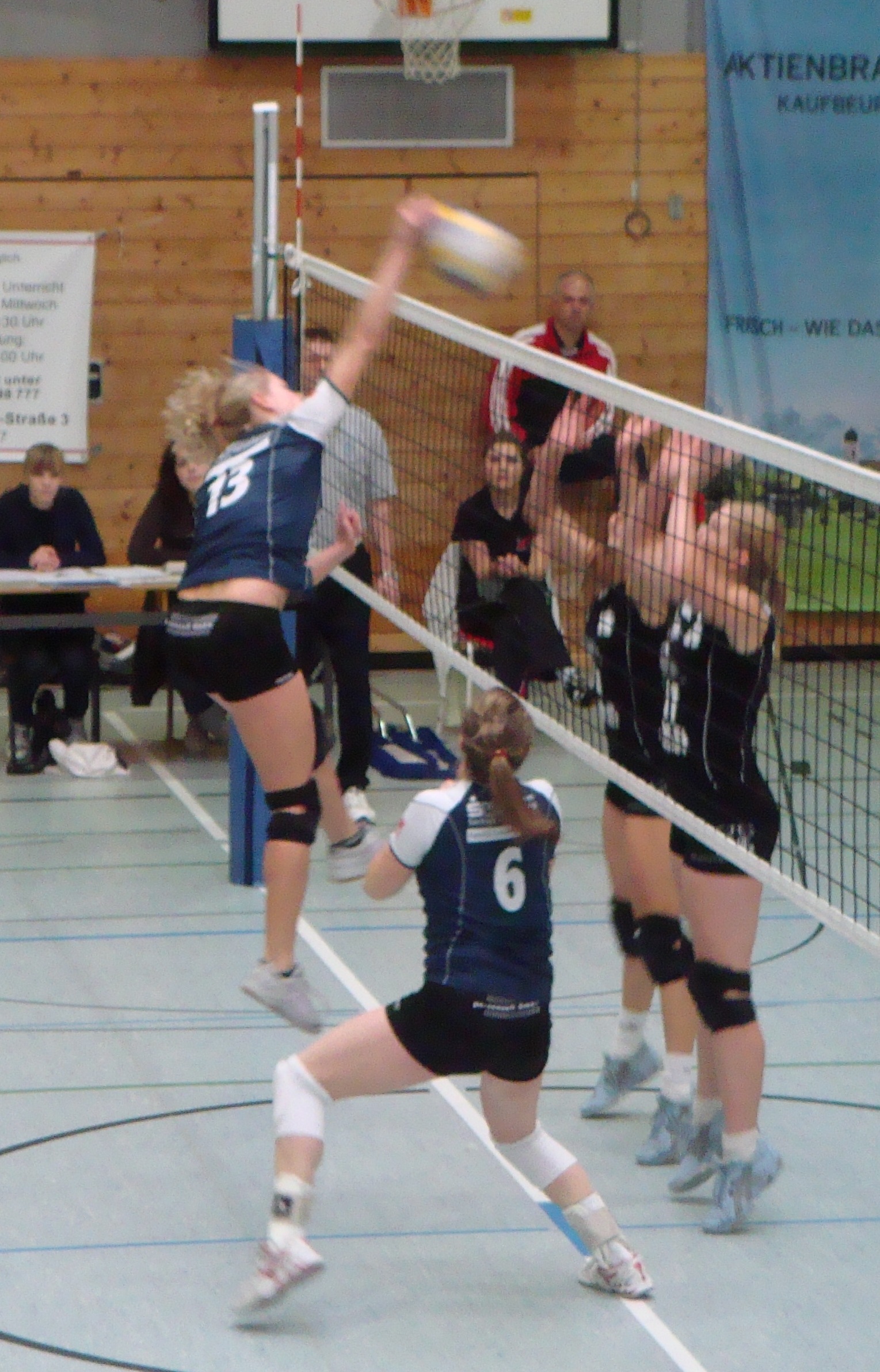

I will be involved with an Italian site on conditioning ( http://nuke.preparazionefisica.it/) and translate their material for an English site. I will contribute to this site, but colloborate and closely support Lauren and Dave on theirs. Thus I am sure we can integrate the best of many worlds and create a strong discussion area for a potential boom sport in Australia.
So much resource and money and talent in sports science and coaching gets somewhat wasted in Australian Rules Football given it has little international exposure and is a “fishbowl” sport. Volleyball in Australia needs this input from here in OZ and also Overseas ( Italy and Germany) and Sports Science and elite sports training methodology must be become a focus in Australian Volleyball at every level , and as Lauren said there is heaps of expertise in OZ.
I hope all our endeavours help the sport and then of course, hopefully, some sponsors realize it is a huge sport. Probably No 3 participant sport in the world but as someone said recently, Soccer is a religion in many countries, so maybe it is the 2nd biggest participant sport around.
Preston Athletics Club and Sunday Morning Training
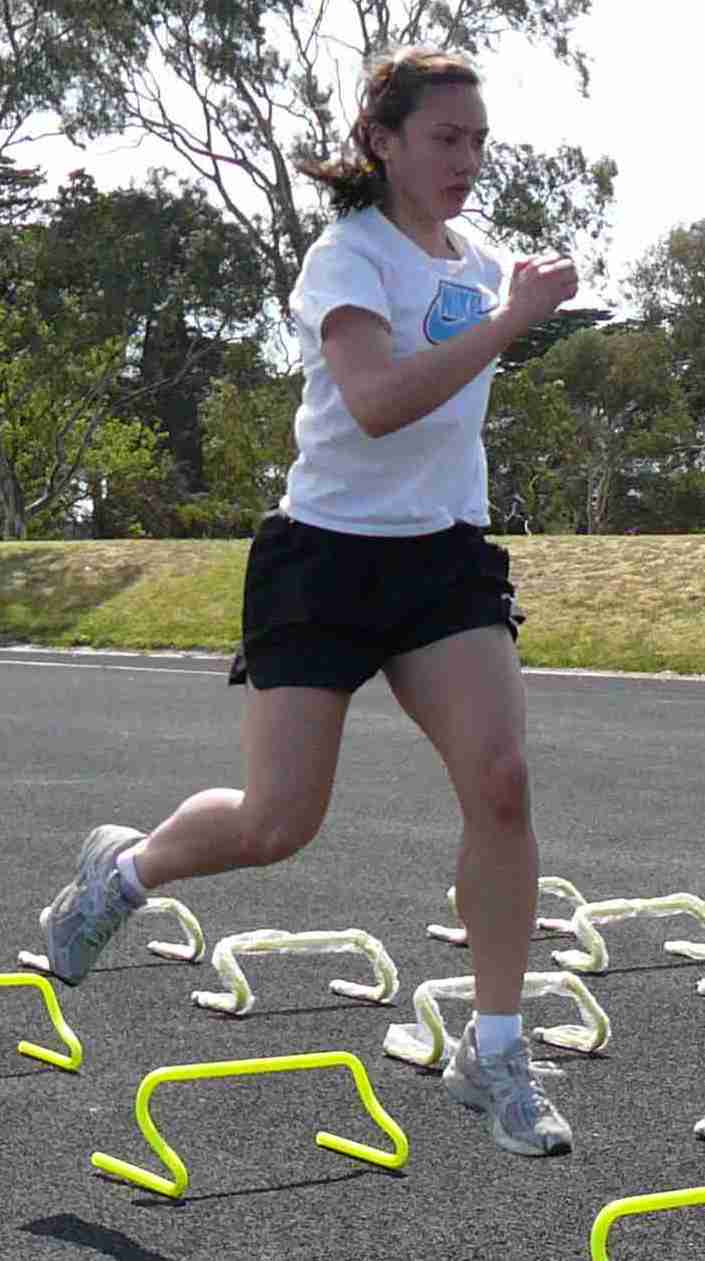
I was at my old club on Sunday 21 October and Jeff Hawkins was coaching his large squad. Melissa Drew, a sprinter, is seen jumping over hurdles at Edwardes Lake Athletics Track in Reservoir.
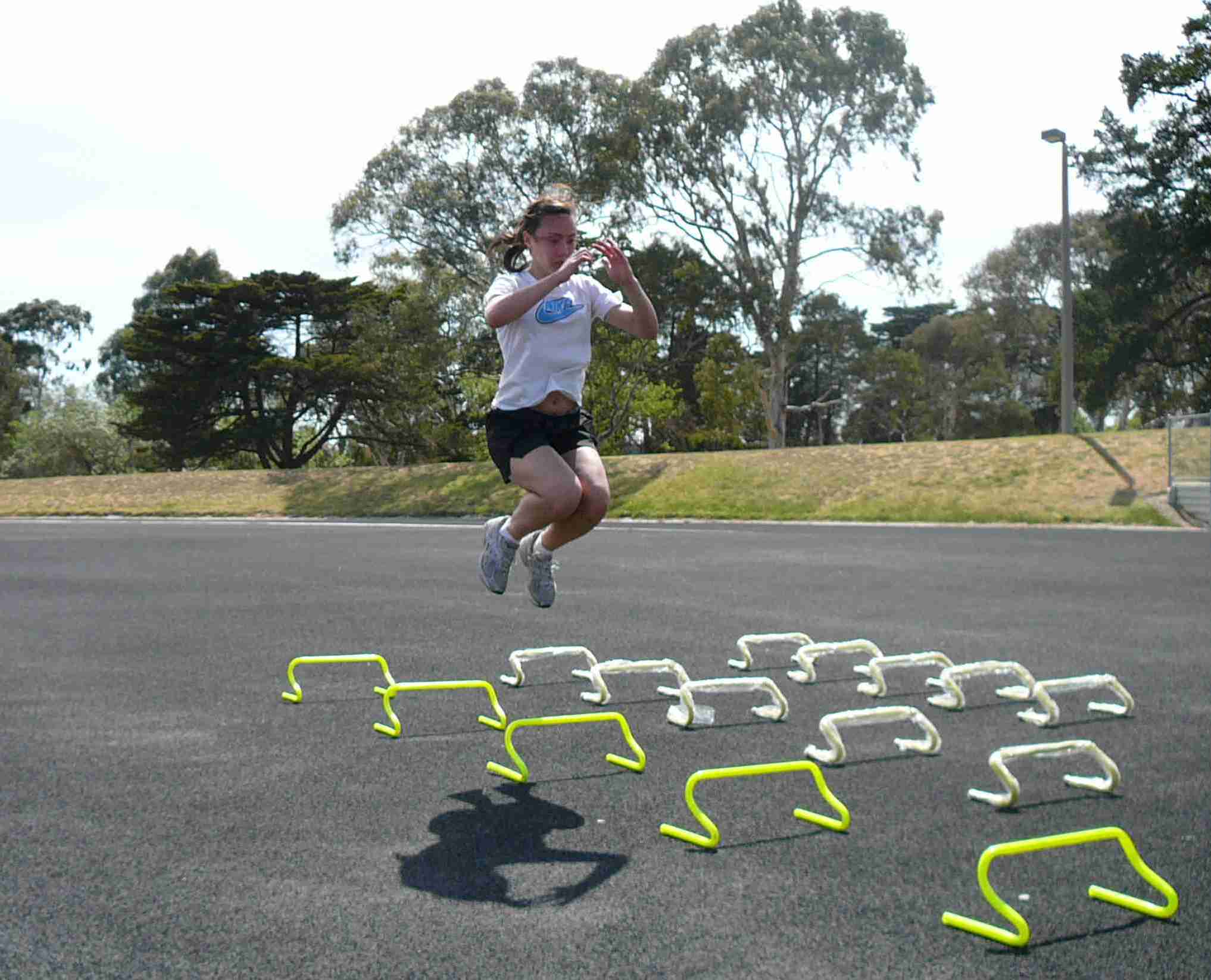
He successfully coaches all events and is an example of the talented coaches in sport who do so much for no financial return and actually provide elite coaching. In fact I have been involved with team sports at the professional level for 20 years and to be honest a coach like Jeff does it better than some I know on 1/2 million dollars or more. My brother in law ( Gus Puopolo) also provides a world class service to athletes at Ringwood and charges nothing and gets results. In all sports not just athletics. The contrast in coaching abilities with some ( not all!) of the people I have worked with is amazing when one compares the work ethic and ability of guys like these. But of course AFL and Rugby and all the other PRO sports get lots of exposure, so if a coach is involved with a winning team then instant guru status ensues. And that is the way it is. C’est la vie. Perception often becomes reality.
I started at Preston in 1967 and my dad coached me till the 70’s. I won the Nationals in 1980 training at Preston then went to the AIS in 1981.

Jeff is seen coaching Melissa Drew ( white shirt) who has run 12.2 electronic and also Olivia Natoli ( blue shirt) who has just started athletics and has run 13.6.

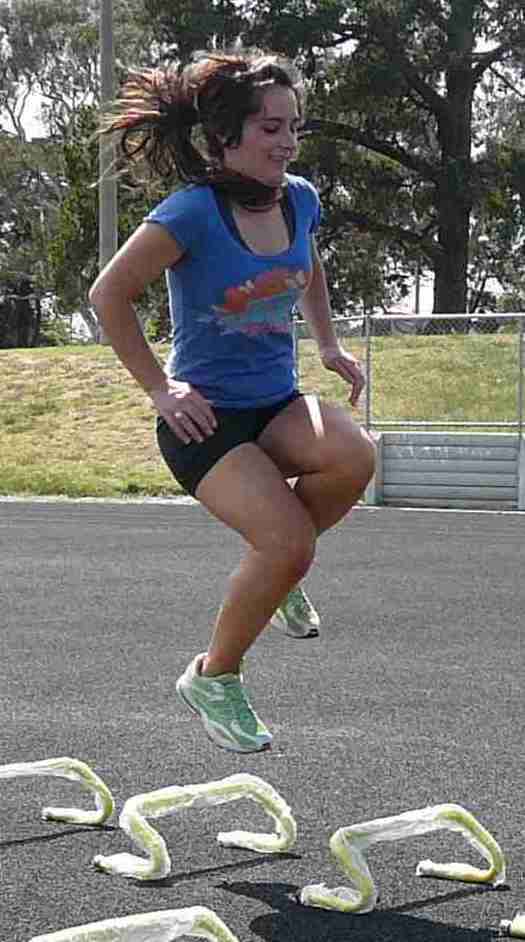
He can be seen giving advice to distance runners one minute and then conducting a plyometric session. Pretty impressive.
Melissa Drew seems to me to be a real hard working athlete who has ability.
Good luck to Jeff, Melissa, Olivia and the rest of the squad for the season.
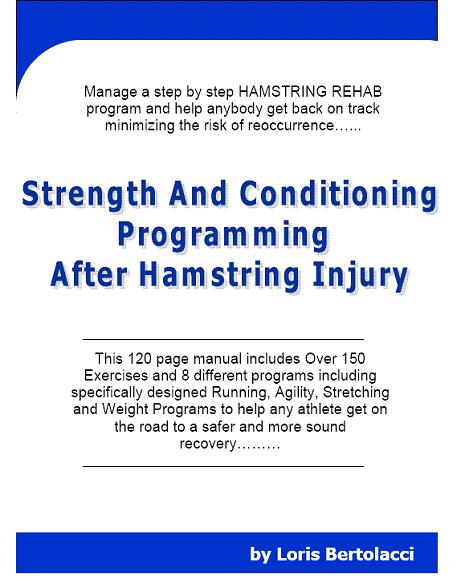
HAMSTRING REHABILITATION E BOOK
Available on my website now
Loris Bertolacci Site
http://www.bertolacci.com.au/LorisBertolacci/Welcome.html
This E Book is a complete resource for anyone that needs to devise practical programs for hamstring rehabilitation. It delves into the current research on this area to back up the programs.
This 120 page manual includes over 150 Exercises and 8 different programs including specifically designed Running, Agility, Stretching and Weight Programs to help any athlete get on the road to a safer and more sound recovery.
Section 1: Hamstring Theory
-
•Introduction
-
•Anatomy
-
•Overstriding and Hamstring Injury
-
•New Studies Implicates the Core in Hamstring Injury
-
•Other Muscles that Impact on the Hamstring
-
•Hamstring Exercises
-
•Why Injuries
-
•Trunk Stability and Hamstrings
-
•Different sports and Hamstring Rehabilitation
-
•So what do you do if you hurt your Hamstring?
-
•Healing Times and Rehabilitation
Section 2: Practical Section
Program Advice
-
•Sample Sessions
-
•Mobilization Sessions
-
•Running Sessions
-
•Mobility Drills
-
•Running Drills
-
•Running Sessions 2
-
•Strides
-
•Agility Sessions
-
•Weights Sessions
-
•Stretching after Training
-
•Plan your own rehabilitation
 loris bertolacci